According to Glassdoor, companies with a strong onboarding process can boost new hire retention and productivity by over 70%. This compelling statistic underscores the importance of employee onboarding practices.
For HR professionals, corporate trainers and hiring managers implementing employee onboarding strategies is essential not just for creating a positive initial impression but also for fostering long term engagement and success.
This comprehensive guide will detail the steps involved in onboarding employees through three phases; Preparation, Integration and Development. These stages aim to assist you in creating an onboarding process that smoothly integrates newcomers into your organization.
The Importance of Effective Onboarding
The initial phase of introducing hires to your company occurs through an effective onboarding process. Onboarding plays a role in shaping the employees journey well as contributing to the company’s overall success. It ensures that employees feel welcomed, informed and prepared to make contributions. Employees who have exceptional onboarding experiences are 2.6 times more likely to be satisfied with their jobs. Furthermore, effective onboarding can result in retention rates, enhanced productivity and a motivated workforce.
We will explore the best practices for onboarding, from before an employee’s first workday to their continued development.
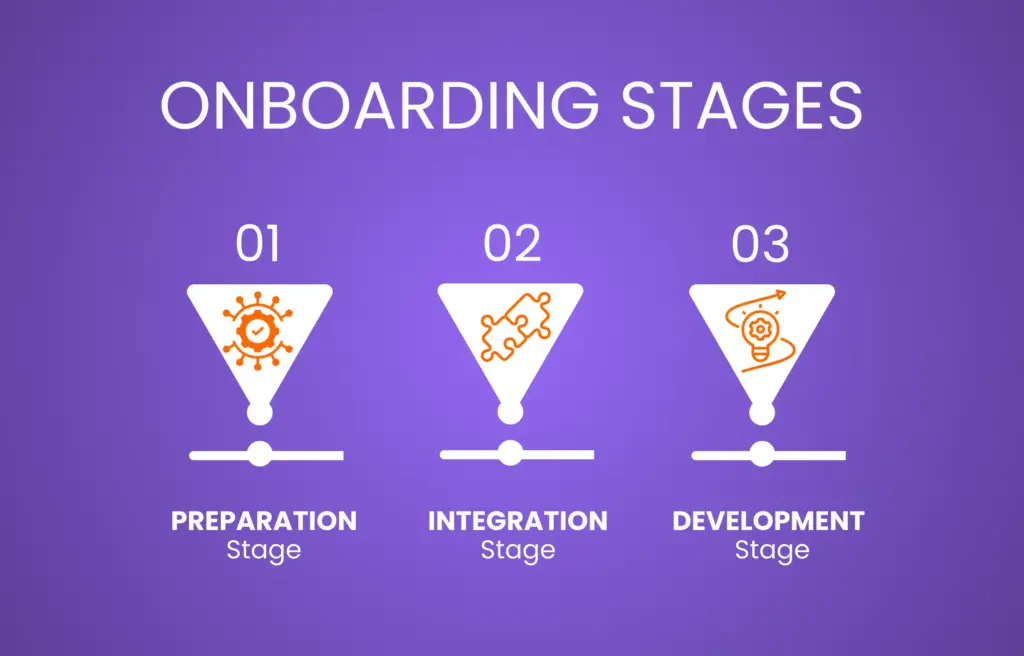
Preparation Stage:
1. Preparation of Employee Documents
Before the new hire sets foot in the office, it’s essential to have all necessary documents prepared and verified. This includes ID proofs, educational certificates, and previous employment records.
Tasks:
- Collect necessary documents.
- Verify and securely store these documents.
- Use an automated document collection tool to streamline the process.
Pro Tip: Ensure all documents are encrypted to protect sensitive information. Automated tools can reduce the chances of manual errors and enhance efficiency.
2. Employee Assets
Equipping new hires with the right tools from day one can significantly impact their initial experience. Proper preparation ensures they can hit the ground running.
Tasks:
- Prepare and assign necessary equipment like laptops, phones, and access cards.
- Set up the employee’s workspace to make them feel welcome.
Pro Tip: Personalize the welcome kit to reflect the new hire’s role or interests. For example, if the new hire is a tech enthusiast, include a high-quality mouse or headphones.
3. Employee Login Credentials
Ensuring that new hires have access to company systems and software is vital for a smooth start.
Tasks:
- Create and share login credentials for company systems.
- Ensure access to necessary tools and platforms is ready before the first day.
Pro Tip: Implement Single Sign-On (SSO) for easier access to multiple systems. This reduces the hassle of managing multiple passwords and enhances security.
4. Pre-Start Communication
Keeping the lines of communication open before the new hire’s first day helps build excitement and reduces first-day jitters.
Tasks:
- Send a welcome email with important information about the first day.
- Share a schedule or agenda for the first week.
- Introduce key contacts they might need.
Pro Tip: Create a virtual welcome package that includes a video message from the CEO or team members. This helps new hires feel more connected even before they start.
Integration Stage:
5. Welcome
A warm and personal welcome can alleviate any first-day nerves and set a positive tone for the employee’s experience.
Tasks:
- Ensure a personal welcome from HR or the hiring manager.
- Provide a welcome kit with company-branded items and useful information.
Pro Tip: Schedule a personal welcome meeting with the new hire’s direct manager to discuss expectations and answer any initial questions.
6. Introduction to the Company
Understanding the company’s history, mission, values, and structure helps new hires align with the company’s goals and culture..
Tasks:
- Provide an overview of the company’s history, mission, vision, and values.
- Explain the organizational structure and key departments.
Pro Tip: Use interactive tools or gamified content for company orientation. This makes learning about the company’s history and values more engaging.
For more on this, you might find the article on the Importance of Organizational Culture useful.
7. Company Policies
Clear communication of company policies ensures that new hires understand expectations and guidelines from the start.
Tasks:
- Explain company policies on attendance, leave, dress code, etc.
- Provide a handbook or digital resource for reference.
Pro Tip: Create an interactive online policy guide or FAQ section. This makes it easier for new hires to understand and access company policies.
To explore more about company policies, check out What are the Basic HR Policies.
8. Company Tour
A tour of the office premises helps new hires familiarize themselves with their new environment.
Tasks:
- Offer a tour of the office premises or a virtual office tour for remote employees.
- Introduce facilities like the cafeteria, gym, etc.
Pro Tip: For remote employees, provide a virtual tour that includes video clips of key areas and introductions to team members they’ll be interacting with frequently.
If you’re managing remote employees, consider the article on Top 5 Strategies to Manage Remote Employees for additional tips.
9. Introduction to the Team
Meeting their new colleagues early on helps new hires feel part of the team and eases their transition into the company.
Tasks:
- Arrange meet-and-greet sessions with team members and other key stakeholders.
- Organize a team lunch or coffee break for informal interaction.
Pro Tip: Set up virtual meet-and-greet sessions if your team is remote. Use video conferencing tools to facilitate these introductions.
10. Resource Allocation and Credentials
Ensuring that new hires have all the resources they need from day one is crucial for their immediate productivity.
Tasks:
- Ensure the employee has all necessary resources and access to tools.
- Prepare a digital onboarding checklist that new hires can access to ensure they have all necessary resources and credentials.
Pro Tip: A digital onboarding checklist helps new hires keep track of what they have and what they need, ensuring nothing falls through the cracks.
11. Training Program
Providing a structured training program helps new hires understand their role and perform effectively.
Tasks:
- Provide an overview of the training program and schedule.
- Arrange initial training sessions on key aspects of the job.
Pro Tip: Use a Learning Management System (LMS) to track progress and provide feedback on training modules.
Development Stage:
12. Ongoing Training
Continuous learning and development are essential for keeping employees engaged and improving their skills.
Tasks:
- Schedule regular training sessions to cover advanced topics and skills.
- Encourage continuous learning and development.
Pro Tip: Encourage new hires to set personal learning goals and track their progress with regular check-ins.
13. Managerial Support
Regular check-ins with a manager help address any concerns and provide guidance to new hires.
Tasks:
- Schedule regular check-ins with the manager to address any concerns or questions.
- Provide feedback and guidance on performance.
Pro Tip: Implement regular 1-on-1 meetings with the manager to provide feedback and discuss career development.
14. Buddy Program
Assigning a buddy or mentor helps new hires feel supported as they learn to navigate the company.
Tasks:
- Assign a buddy or mentor to assist the new employee.
- Encourage the buddy to be approachable for any queries or support.
Pro Tip: Select buddies who are not only knowledgeable but also enthusiastic about mentoring. Provide training for buddies to ensure they are effective in their role.
15. Cultural Integration
Helping new hires integrate into the company culture fosters a sense of belonging and engagement.
Tasks:
- Organize events and activities to immerse the new employee in the company culture.
- Encourage participation in team-building activities and social events.
Pro Tip: Organize informal social events, like virtual happy hours or team-building exercises, to help new hires build relationships and integrate into the company culture.
16. Performance Reviews
Regular performance reviews help assess the new hires’ progress and set goals for their future development.
Tasks:
- Conduct regular performance reviews to assess progress and set goals.
- Provide constructive feedback and recognition for achievements.
Pro Tip: Use a structured review process with clear criteria and examples to provide actionable feedback and recognize achievements. Set clear goals and expectations for future performance.
Learn more about the impact of such practices in How Does Employee Turnover Affect a Company
Conclusion
Creating an onboarding process is essential for HR teams and managers to ensure that new employees feel welcomed, engaged and prepared for their roles. By following the recommendations provided in this blog post HR professionals can establish an onboarding experience that supports employee retention and boosts productivity.
It’s important to remember that onboarding is a journey tailored to meet the changing needs of both the organization and its staff. By embracing these best practices organizations can set their hires up for success and foster a positive working environment.
We’re interested in hearing about your experiences with onboarding and any additional tips you may have. Feel free to share your insights, in the comments section!