










































Why do pharmaceutical companies need specialized HR software?
Pharmaceutical companies operate with multi-shift teams, regulated documentation, and mixed workforce payroll across production, labs, and field roles. HR software for pharmaceutical companies ensures these processes run in a structured, compliant system instead of relying on disconnected tools and manual tracking.
What challenges are unique to pharmaceutical workforce management?
Pharmaceutical workforce management involves coordinating shift-based production teams, maintaining compliance documentation, managing field force attendance, and processing payroll across multiple employee types. These combined demands make standard HR systems difficult to rely on.
How can pharma companies stay audit-ready year-round?
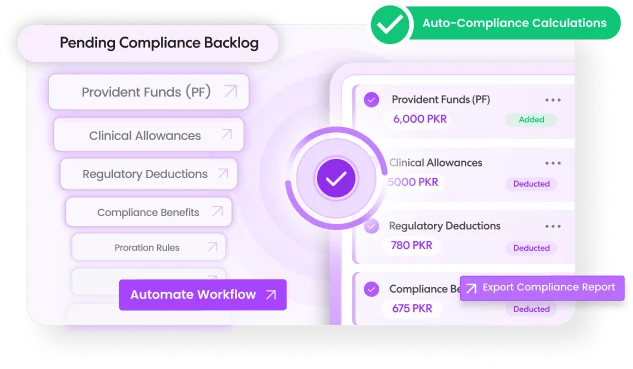
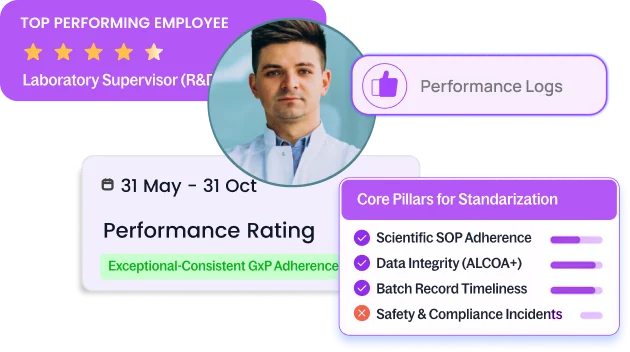
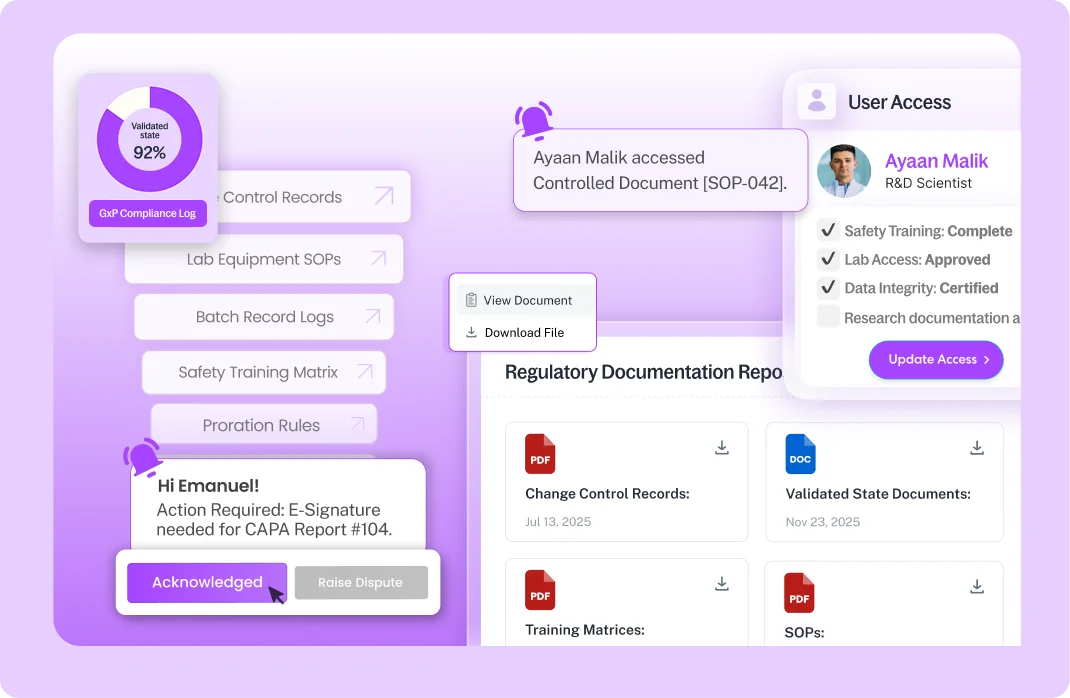
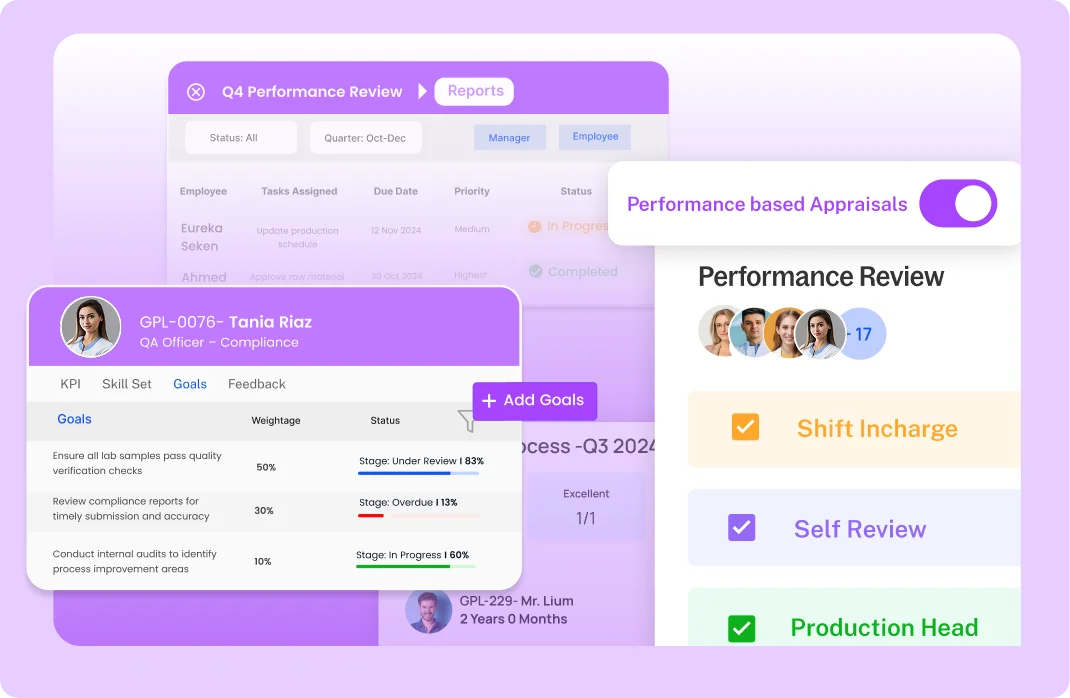
Audit readiness in pharma depends on maintaining accurate, up-to-date records across certifications, training, and employee documentation. This includes audit logs for attendance, employee history, and compliance records. HR software for pharmaceutical companies centralizes and tracks these records, ensuring they remain accessible and up to date instead of being prepared just before an audit.
How do pharmaceutical companies manage multi-shift workforce scheduling?
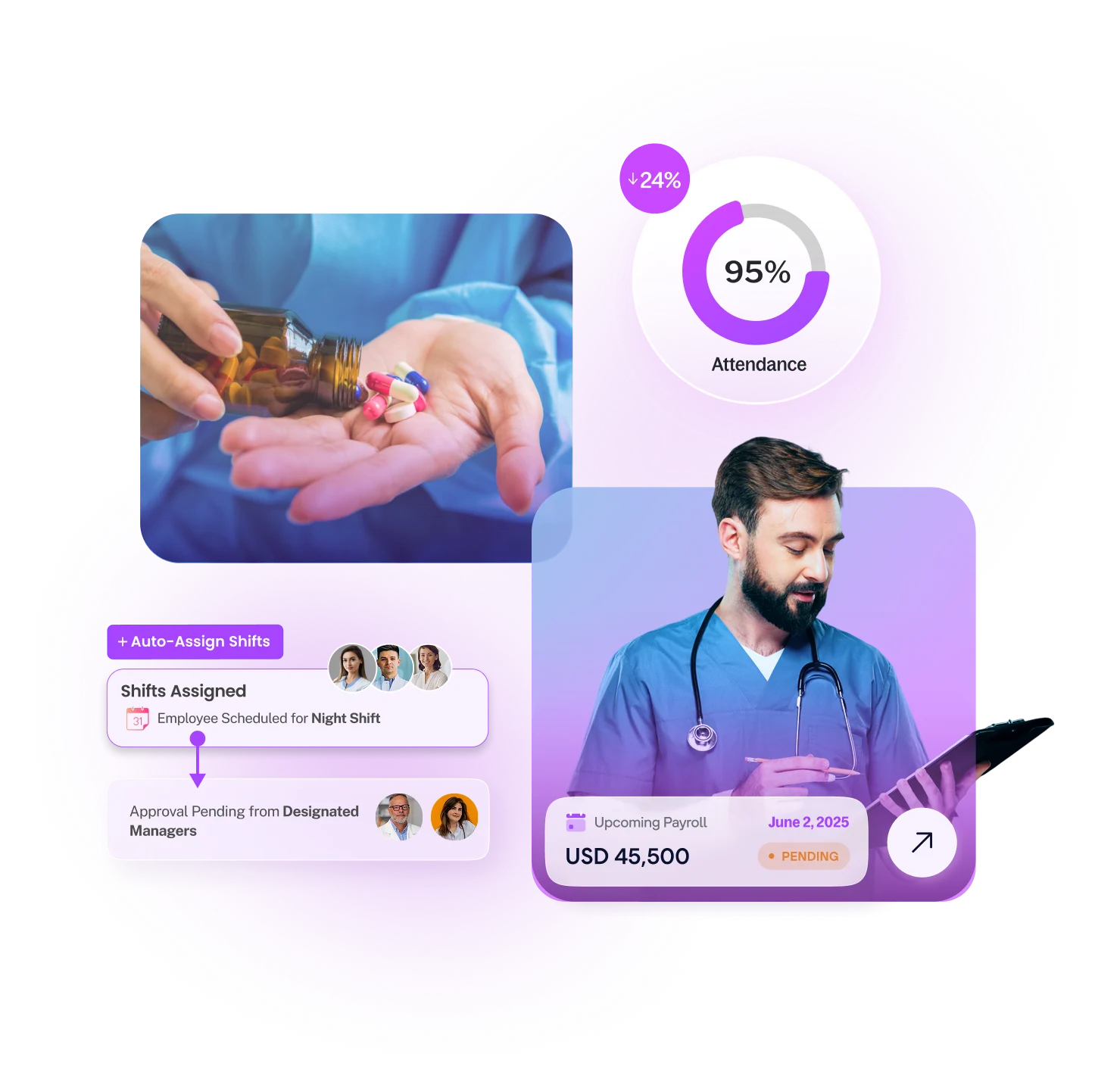
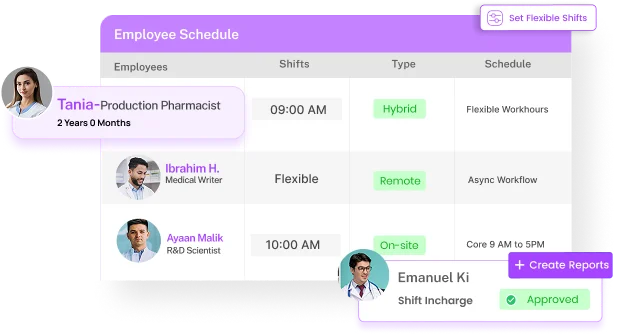
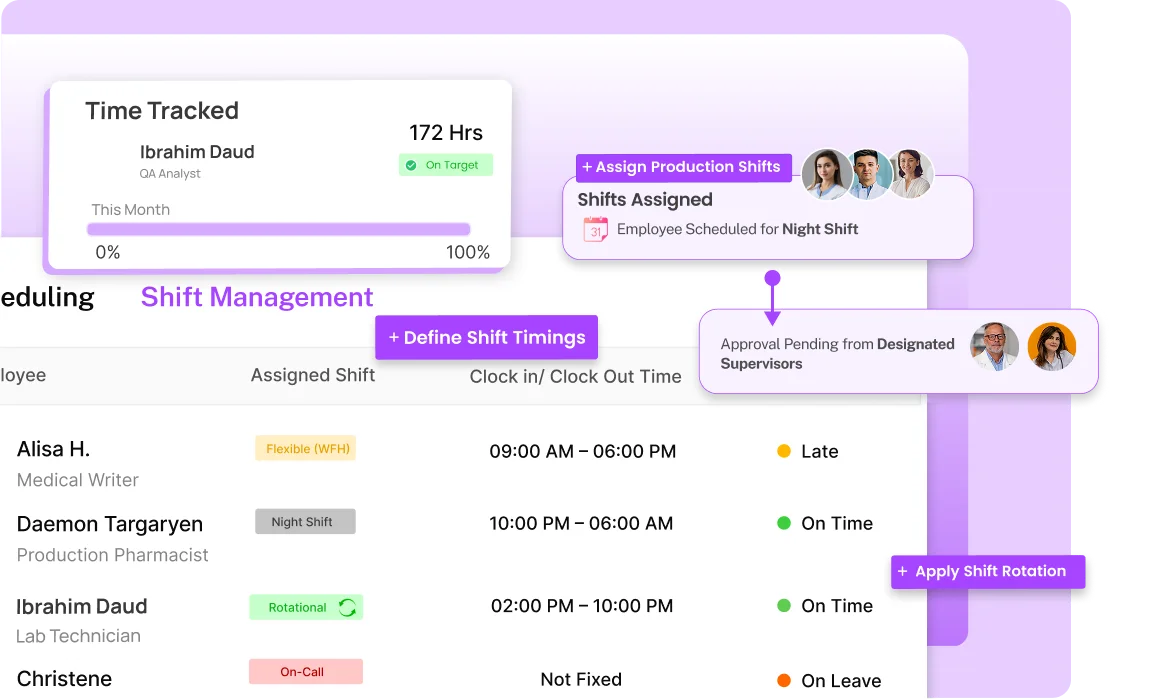
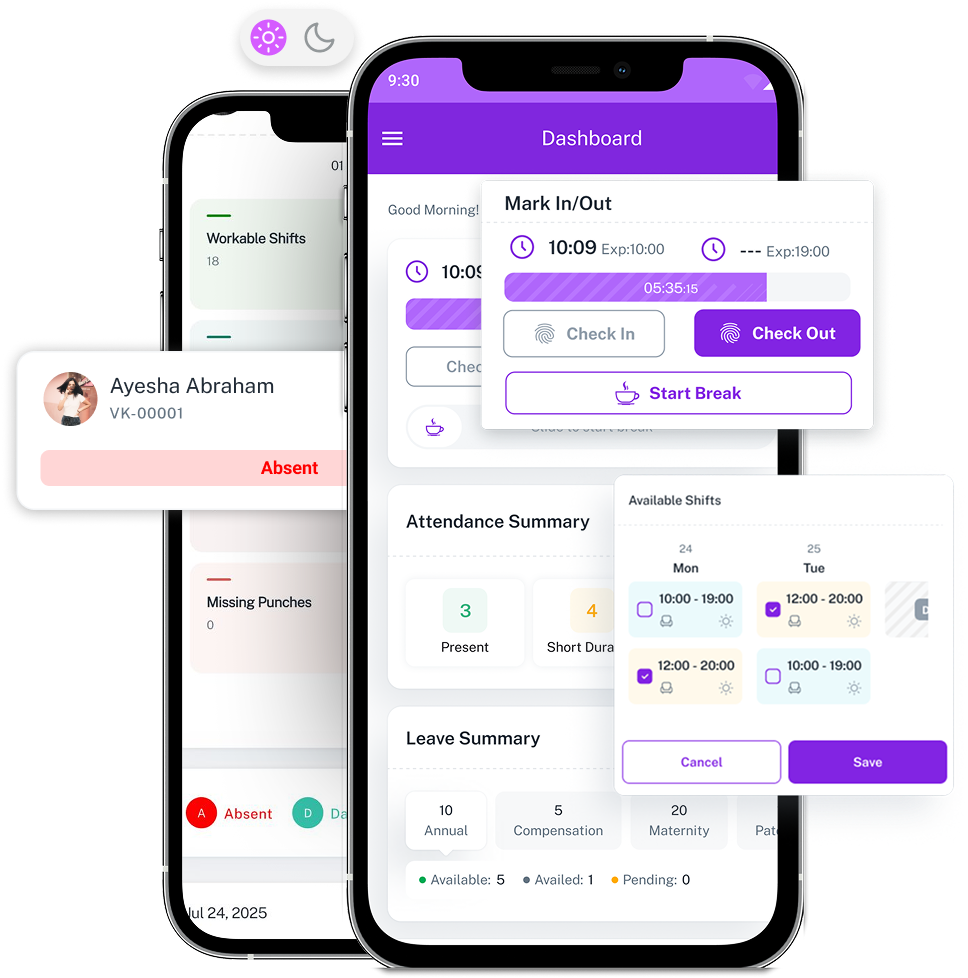
Pharma companies manage scheduling by structuring shifts across manufacturing, QA, R&D, and support teams while ensuring coverage for every role. A dedicated system helps prevent overlaps, identify gaps early, and maintain consistent shift planning across all departments.
How can HR systems prevent shift gaps in production environments?
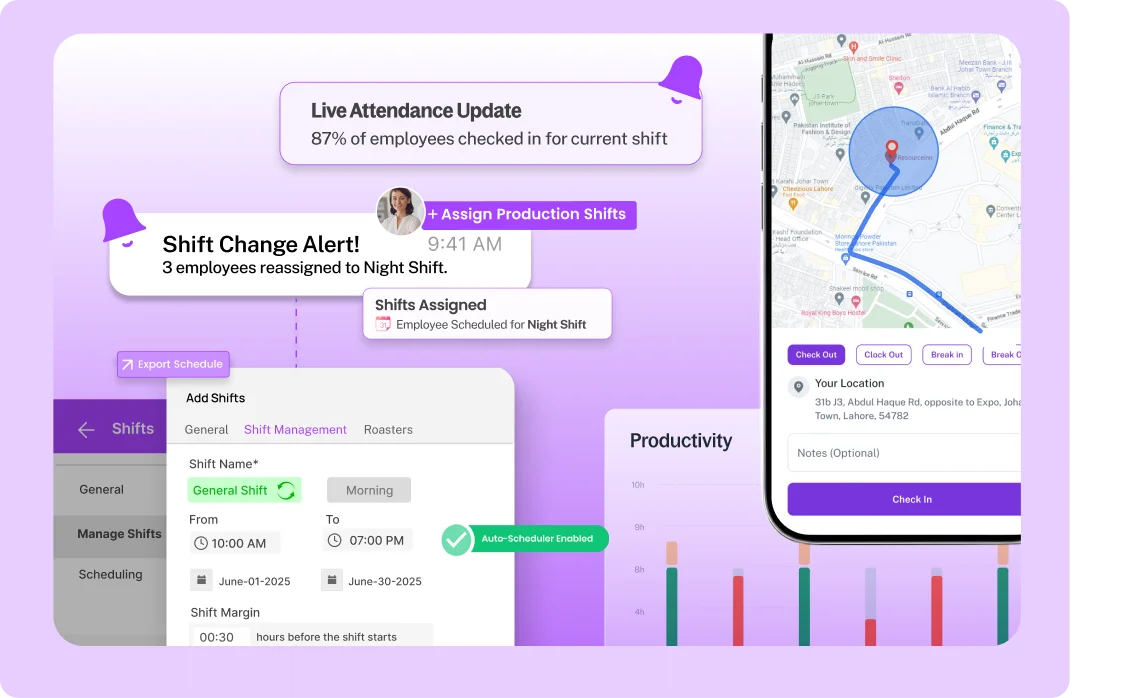
A shift gap occurs when a required role is left unassigned during a production cycle, potentially disrupting operations. HR systems reduce this risk by structuring shift planning, highlighting unassigned roles, and improving visibility before schedules are finalized so managers can ensure complete coverage across teams.
How do pharmaceutical companies manage payroll for a mixed workforce?
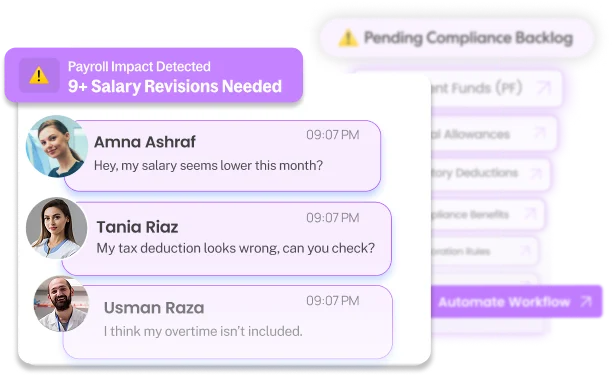
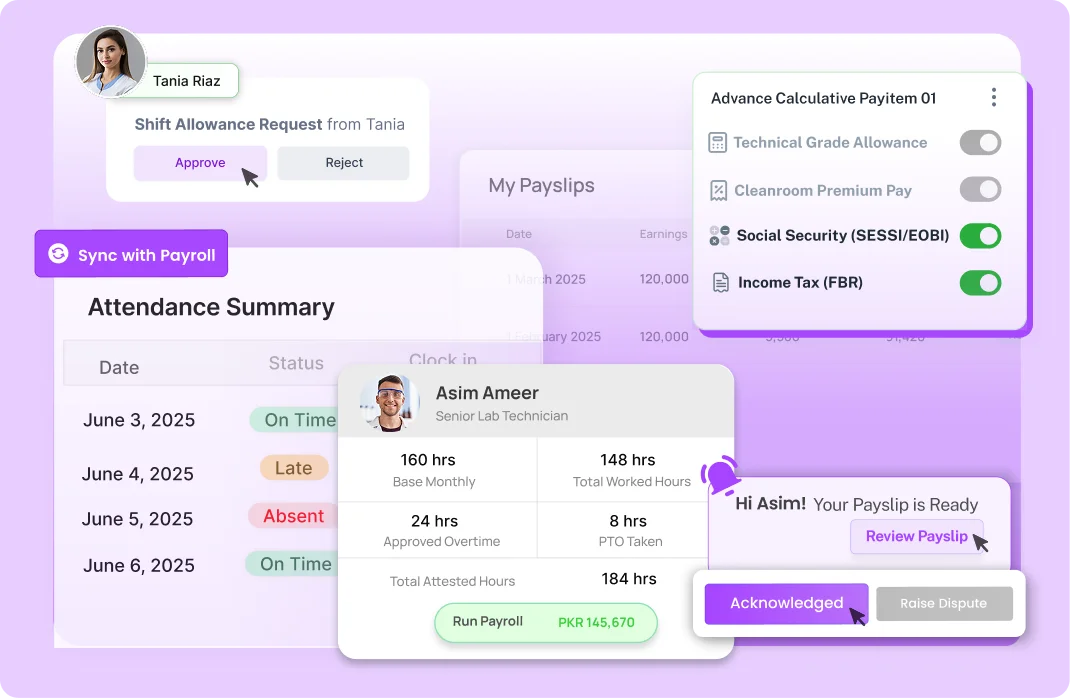
Pharma payroll involves processing salaries for permanent employees, contractors, factory workers, and field teams within one system. HR software for pharmaceutical companies automates overtime, allowances, deductions, and can support commission or piece-rate payroll. Integration with accounting tools like QuickBooks or Xero helps maintain accurate employee ledgers and consistent financial tracking.
How can HR software reduce payroll errors in pharma operations?
Payroll errors are reduced by automating calculations, standardizing policies, and maintaining a complete audit trail for every transaction. This minimizes manual intervention and ensures consistency across payroll runs.
How do pharma companies track attendance for field force teams?
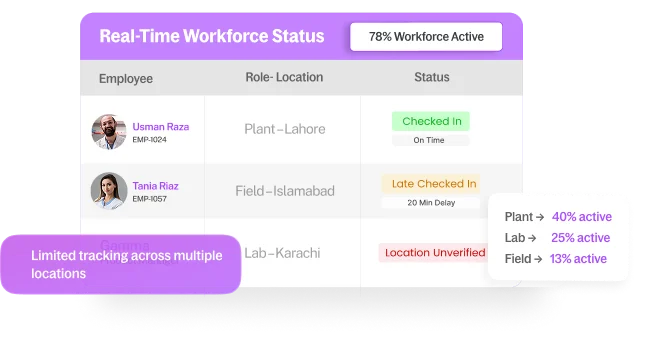
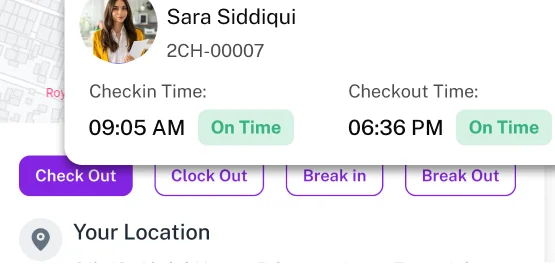
Field force attendance is tracked using GPS-based systems and location validation, allowing HR teams to monitor real-time activity without relying on manual check-ins. This improves visibility and accountability across remote teams.
Can one HR system manage multiple pharma locations and facilities?
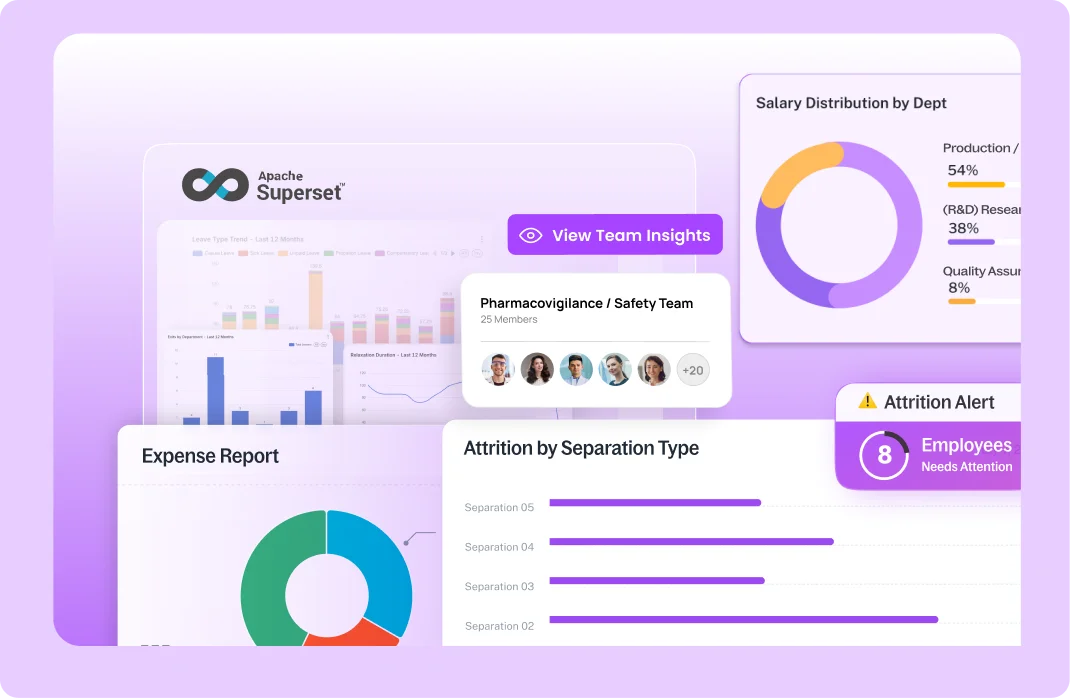
Yes, a centralized HR system can manage workforce operations across multiple plants, labs, and offices while providing location-level visibility. This ensures consistent processes and reporting across all facilities.
What should pharmaceutical companies look for when choosing HR software?
Pharmaceutical companies should look for HR software that supports multi-shift scheduling, compliance documentation, mixed workforce payroll, and real-time visibility across locations. The system should align with how pharma operations function rather than requiring process adjustments. Platforms like Resourceinn are built around these requirements, helping pharmaceutical teams manage workforce complexity without relying on multiple disconnected tools.