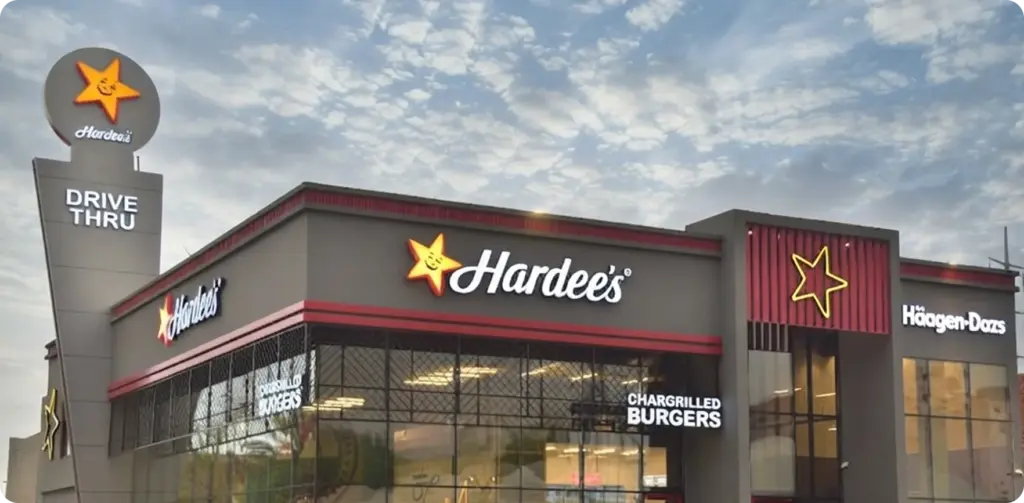

Usman Aziz heads the HR, Organizational Development, and Training departments at MDS Foods Private Limited, the company behind Hardee’s Pakistan. He oversees how the brand uses field force management software across HR operations, recruitment, payroll, and training for its nationwide restaurant network.
Challenges
Running a quick service restaurant chain across multiple Pakistani cities meant Hardee’s Pakistan needed field force management software to see and control what was happening at every location from a single head office, instead of relying on paper records or phone calls to confirm what was actually going on.
Attendance Without Head Office Control
Traditionally, QSR operations relied on manual attendance registers kept at each restaurant, with no field force management software connecting any of it back to the head office. At the restaurant level, there were things the head office simply had no visibility into. Running centralized operations across a national footprint meant losing the informal, on the ground checks a single location naturally has, without gaining anything to replace them.
"The biggest challenge was that in the manual system, there are some things at the restaurant level that you don't have control over."

Tracking a Field Force Across Multiple Cities
Hardee’s Pakistan’s operations depend on people who are constantly moving between locations rather than sitting at a desk, exactly the kind of problem field force management software is built to solve. LSM teams visit corporate offices for sales, while unit managers, area managers, and regional managers travel between restaurants across the country. Without a way to confirm these visits, the head office had no reliable method to know whether scheduled visits were actually happening.
"You can't control what's going on in Karachi. You can't verify the CCTVs. If an LSM team has gone to visit somewhere, you can't keep your checks on that."
Payroll Cost With No Visibility
Payroll sits among the largest controllable costs in the QSR industry, and Hardee’s Pakistan needed field force management software to actually manage it. Without centralized attendance and labor data, controlling payroll cost across dozens of restaurant locations meant working from fragmented, restaurant level information rather than one accurate picture.
"Payroll is one of the major costs, within the controllable cost. And if you control this cost, you can save a lot."
Solution
Hardee’s Pakistan implemented Resourceinn’s field force management software as a complete replacement for manual attendance tracking, not a single point feature, choosing field force management software that could handle attendance, payroll, and field visibility together. The rollout addressed attendance, field visibility, and payroll cost control together, giving the head office one accurate source of information across every restaurant location.
Centralized Attendance Control from the Head Office
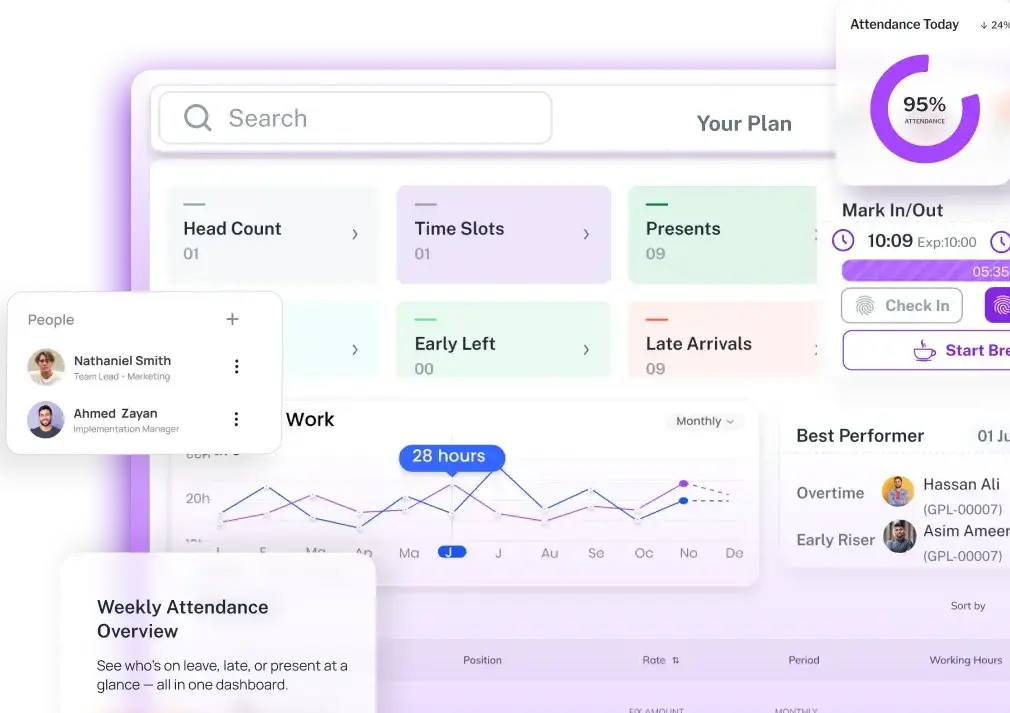
Employees now mark attendance directly through the field force management software’s mobile application, replacing the manual registers that previously left the head office blind to what was happening at each restaurant. This shift gave Hardee’s Pakistan real, verifiable attendance data instead of paper records that were difficult to audit or trust.
"The value adding feature of Resourceinn is that you can mark your attendance through a mobile application."
GPS Verified Field Force Tracking
For LSM teams, unit managers, area managers, and regional managers who move between restaurants and corporate offices, the field force management software captures GPS location at the moment of check in. That location is matched against the scheduled visit, giving the head office confirmation that a field visit actually happened rather than a self reported log.
"We can track their locations, whether they are visiting the restaurants on a timely basis according to their scheduling."
Payroll Cost Control Through Labor Metrics
With attendance data flowing in from every location through the field force management software, Hardee’s Pakistan was able to implement labor metrics that connect staffing decisions directly to payroll cost, rather than managing cost and attendance as two disconnected processes.
"We were able to successfully implement the labor metrics. We controlled our payroll cost."
Impact
- Head office gained real time attendance visibility across restaurants in Lahore, Karachi, Multan, Islamabad, Peshawar, Faisalabad, Gujranwala, Sialkot, and Gujrat through field force management software
- LSM, unit, area, and regional manager field visits are now GPS verified rather than self reported
- Payroll cost, one of the QSR industry’s largest controllable expenses, is actively managed through automated labor metrics
- HR data that previously took 7 working days to compile now takes a couple of days
- Employees access their own attendance, payroll, and salary information directly, removing dependence on manual registers or WhatsApp groups
- Hardee’s Pakistan opened 8 new restaurant locations in one year without adding HR headcount
- One HR resource now supports 100 to 150 employees, up from a ratio of roughly 1 to 50
- Field force management software replaced the manual dependence on CCTV checks and phone confirmations across every city
Results
Field force management software gave Hardee’s Pakistan a single, centralized view of attendance, payroll, and field operations across a restaurant network spread over nine cities. What used to require 7 working days to compile now takes a couple of days, and the head office no longer depends on restaurant level paperwork or phone calls to know what is happening across the country. The workforce needed to manage these operations also shrank meaningfully even as the business kept opening new locations, a direct result of the field force management software replacing manual tracking.
"Last year, we almost opened 8 stores. So I didn't need any additional resources."
Why QSR Companies Choose Resourceinn
Restaurant chains operating across multiple cities face a version of the same problem Hardee’s Pakistan solved: staff and managers spread across many locations, payroll that is difficult to control without centralized data, and a head office with no reliable way to confirm what is happening at each site. Field force management software addresses this directly by giving restaurant operators GPS verified attendance and a single source of payroll and workforce data, regardless of how many cities they operate in, which is why more QSR operators are moving away from manual systems toward field force management software built for multi city operations.
Resourceinn works with 1,100+ companies across 30+ industries, including QSR and restaurant brands managing workforces from a few hundred to well over a thousand employees using field force management software to stay in control of every location.
Restaurant operators exploring restaurant HR software can see how it applies across multi-city QSR operations beyond Hardee’s Pakistan alone.
Field force management software is not a single feature for restaurant chains. It is what makes it possible to run centralized operations across cities without losing the on the ground visibility a single location naturally has.
Frequently Asked Questions
What is field force management software?
Field force management software tracks and coordinates employees who work outside a fixed office location, area managers, regional managers, and mobile staff, using GPS based attendance and location verification. For QSR and restaurant chains, it extends this to field based roles like LSM (Local Store Marketing) teams and multi restaurant area managers who move between locations rather than sitting at a desk. The core function is replacing manual sign in sheets or phone check ins with automated, location verified attendance.
How does GPS based attendance tracking work for QSR field managers?
Employees mark attendance through a mobile app, which captures their GPS location at the moment of check in. That location is matched against the scheduled restaurant or site, so the head office can confirm a field manager was actually present rather than relying on a phone call or manual report. This removes the need to manually verify visits through CCTV footage or after the fact reporting.
Is field force management software suitable for multi city restaurant chains?
Yes, it’s built specifically for organizations where staff and managers are spread across multiple cities rather than a single location. A restaurant chain operating in cities like Lahore, Karachi, and Islamabad can centralize attendance, payroll, and field manager tracking into one system instead of running separate manual processes per city. The software scales with new store openings without requiring proportional headcount increases in HR.
How long does it take to implement field force management software for a restaurant chain?
Initial implementation typically centers on building out employee profiles and attendance configurations for each location, which is the most time intensive part of onboarding. Once profiles are built, ongoing rollout to new restaurant locations is fast, a chain can open new stores without needing weeks of additional HR setup per location. Most of the implementation effort is front loaded into the first setup phase.
What results can QSR companies expect from field force management software?
Restaurant chains commonly see reduced HR headcount needs as manual attendance and payroll processes become automated, some operators report cutting HR to employee support needs by roughly half. Data turnaround for payroll and attendance reporting typically drops from a multi day manual process to same day or next day processing. Companies can also open new locations without proportionally increasing HR staff.
Can employees access their attendance and payroll through a mobile app?
Yes, employees can log in to a self service portal or mobile app to view their attendance history, payroll details, and salary information directly, without contacting HR. This removes the dependency on manual record keeping methods like WhatsApp groups or paper registers that are common in QSR operations. Self service access reduces the volume of routine HR queries significantly.
Why is payroll cost control difficult in the QSR industry?
Payroll is one of the largest controllable costs in QSR because staff work across many locations with variable shifts, making manual tracking prone to error and difficult to audit centrally. Without automated attendance data, head office has no reliable way to verify hours worked at each restaurant, which limits its ability to manage labor cost as a controllable expense. Centralized, automated attendance data is what allows labor cost metrics to actually be enforced.
Has Resourceinn worked with QSR or fast food companies before?
Yes, Resourceinn has implemented HR and attendance software for QSR and fast food chains operating across multiple Pakistani cities, including multi location restaurant brands managing workforces in the hundreds to over a thousand employees. These implementations typically center on attendance, field force tracking, and payroll cost control as the primary use cases.
How does attendance software help track LSM, area, and regional managers?
The mobile app records each manager’s location when they mark attendance at a scheduled restaurant visit, giving head office a verified record of where field staff were and when. This is particularly relevant for roles like LSM (Local Store Marketing) teams and area managers who visit multiple restaurants or corporate offices as part of their role, rather than working from one fixed site. It replaces the need to manually cross check CCTV footage or rely on self reported visit logs.
Can field force management software reduce HR headcount needs?
Yes, by automating attendance capture, payroll calculation, and field manager tracking, companies can manage a growing employee base without adding HR staff in proportion. Restaurant chains that previously needed one HR resource for every 45 to 50 employees have been able to shift that ratio to one HR resource per 100 to 150 employees after automating these processes. The reduction comes from eliminating manual data entry and reconciliation work, not from reducing HR’s oversight role.