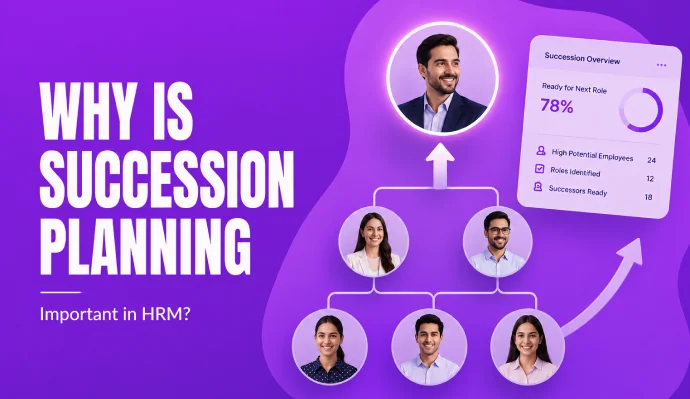

Succession planning can be defined as the strategic procedure of identifying and preparing current/internal employees to step into critical roles in the company or organization. In case of leadership change, departures, or unforeseen events, the successor should have the skill and aptitude to carry on the role and ensure smooth operations of the company/organization.
Daily, employees are resigning, getting promoted, or leaving companies to travel to new locations. Either way, the gap has to be filled with talented resources from the talent funnel created by the HRM or HR department. To guarantee the success of this process, a solid plan needs to be executed by the HRM working along the company operations.
Pre Conditions of Success Planning in HRM
Two crucial conditions are needed to create the best succession planning framework in your company and are as follows:
- Cultivating a Culture of Leadership Development
- Identifying Critical Roles
Let’s start with the first condition and learn how cultivating a culture of leadership development benefits a company in the long run.
1. Cultivating a Culture of Leadership Development
Leadership development is one of the most important factors that helps to establish a culture of succession planning via HRM at all levels in a company. The process starts from top to bottom, from the senior management tier (including the CEO, CTO, CFO, etc) to the bottom. Succession Planning in HRM is a proactive process that consistently trains and develops employees to take up decision-making roles in the future.
- Participation of Senior Leaders: Senior executives and higher management need to mentor/coach employees with the potential to be successors. Engagement in activities to nurture leadership qualities ensures that these employees can fill in future openings in the companies helping to prevent any disruption in company operations. The involvement of senior management strengthens the bond of the successor to the company’s values and vision.
- Embed Leadership Development in Performance Appraisals: There is a need to integrate leadership development in management performance evaluation and reward systems. An enabling environment where leadership is developed and valued will be achieved by recognizing and rewarding leaders who work hard to coach and develop high-potential employees.
2. Identifying Critical Roles in Succession Planning
In Human Resource Management (HRM), identifying critical roles is essential for effective succession planning. The roles below are key positions that if left vacant or filled by an unsuitable candidate can lead to a decline in the company operations. This can ultimately lead to damage to the organization’s branding.
i). Defining Critical Positions
Critical roles typically consist of senior leadership positions, including:
- Chief Executive Officer (CEO)
- Chief Financial Officer (CFO)
- Chief Operating Officer (COO)
- Other Senior Leadership Roles
To identify the important positions, organizations should therefore do the following:
- Organizational Hierarchy: Scrutinize and analyze the organizational structure to deduce critical roles.
- Assess the Impact on Performance: Based on the developed role profiles, work out the impact of each role’s absence on the overall performance and stability of the organization.
ii). Job Architecture for Clarity
A well-defined role architecture is vital in precisely identifying critical roles. The architecture should include:
- Responsibilities: Clearly described roles for each position.
- Reward System: Rewards include remuneration structures linked to specific roles.
When an organization has a good job architecture, it’s easier to identify critical positions. If such a framework does not exist, organizations can use other alternatives:
- Ranking the roles in order of priority: Select the roles regarding their importance to the organizational success. This way, you’ll know which roles you need to develop succession strategies.
iii). Focus on the Few
According to best practices in succession planning in HRM, the number of critical positions should be small to keep focus and to deploy resources. The key strategies include:
- Top Position Targeting: The top 0.5% of the most critical roles that will have the biggest impact on the success of the organization should be the focus.
- Building sufficient bench strength: Focusing on fewer but critical positions allows the organizations to build deeper bench strength. This bench strength comprises quality personnel better equipped to assume responsibilities in these highly critical positions.
Succession Planning Process in HRM
Succession planning is among the strategic human resource management processes. These are purposed at ensuring an organization is ready, even upon the occurrence of transitions in its leadership. This is often done through several important steps:
- Identification of Critical Positions: Assess and identify the key positions in the organization that are essential for fulfilling the needs related to succession planning.
- Assess Current Talent: Rating of staff, ensuring the identification of high potentials who can demonstrate capabilities and readiness for advancement into critical roles.
- Develop Successors: Provide the names of the successors, with clearly stated development plans and activities in mentoring, training programs, and job rotation to enable them to assume future responsibilities.
- Monitor Progress: Allow the development of potential successors to be reviewed regularly through performance appraisals and other feedback mechanisms that will keep them on track.
- Succession Planning Update: Review and revise succession plans periodically in response to organizational strategies, employee performance, and shifting market conditions.
The structured process herein is a method through which organizations develop a sound leadership pipeline, minimize disruptions when transitions occur, and enhance the general outlook of organizational resilience. Besides securing the future of the leadership, good succession planning brings about good employee engagement and retention with clearly defined career pathways.
Writing a Simple Succession Plan and HRM
Listed below are some of the steps that will help you write an effective succession plan:
- Prepare a list with expected succession goals and requirements.
- Mention key positions within your company, assess if these roles are critical, and number them from most important to the least.
- List the core skills, experience, and academic aptitude needed for the roles identified.
- For each role, prepare a list of nominations from the internal candidates that can fill that role.
- Perform a thorough assessment of each candidate to identify the skill development they need for a role transition.
- Create an outline for specific training, mentoring, and development for all the succession candidates identified by the HRM.
- Make a timeline for candidate development and record their progress.
- Propose a clear action plan for immediate fulfillment of a position if the role becomes vacant.
- The plan should be an easy-to-understand and accessible format.
Succession Planning in HRM and its Benefits
A company achieves both short-term and long-term benefits through succession planning. Here are some of the notable advantages:
1. Ensures Business Continuity
Succession planning ensures an organization is prepared for possible leadership transitions to minimize disruption time. This speaks of a company/organization where, at the appropriate juncture, well-trained successors take over responsibilities and keep the business running without any form of interference or interruptions.
2. Keeps Top Talent
Succession planning offers clear career paths that make employees want to continue with the organization. Employees would like to see their opportunities for advancement and therefore will be more committed and engaged.
3. Supports Strategic Planning
Succession planning exists to align talent development with organizational goals by identifying key roles and necessary skills that help create a workforce strategy that enables the organization to achieve its long-term objectives.
4. Decreases Recruitment Costs
Succession planning decreases the need for external recruitment by promoting internal candidates for key positions; therefore, it saves time and resources because it is easier to find the appropriate cultural fit.
5. Preserves Knowledge within an Institution
Succession planning retains valuable knowledge in the company. When longer-tenured employees either transition to other roles or retire, they are in much better positions to mentor those coming after them and assist the firm in retaining valuable insights.
6. Enhances Leadership Development
It ignites a culture of development and continuous learning, equipping employees with more skills in preparation for future leadership roles.
7. Reduces the Risk of Turnover
Succession planning reduces the risks related to involuntary separations or employee resigns. Organizations can rapidly deploy key resources, ensuring stability and performance.
8. Creates a much Stronger Organizational Culture
Succession planning builds a culture of collaboration and support. When employees know there is a flow or plan to their development in an organization, they are more apt to work together.
9. Increased Organization Resilience
A well-focused succession plan keeps the organization resilient upon the arrival of change. This resilience perhaps may be the key for businesses to adapt to challenges arising and, where applicable, seize their new opportunities as they arrive.
Best Practices of Succession Planning in HRM
Some of the best practices in succession planning in HRM are mentioned below:
1. Identify Critical Positions
Recognize which roles are essential for organizational success. Focus on leadership and high-impact roles that, if left vacant, could disrupt operations.
2. Assess Current Talent
Assess the competence and potential of current staff to identify high-potential candidates. Use performance reviews and assessments to determine readiness for advancement.
3. Create Development Plans
Provide relevant training and mentoring programs to identified successors to ensure that the successors acquire the necessary competencies and experiences to assume critical roles.
4. Engage Senior Leadership
Involve the top executives in succession planning. Their involvement in mentoring and developing future leaders will signal seriousness regarding leadership continuity.
5. Regularly Monitor Progress
Continuously gauge progress the potential successors are making through regular feedback and performance appraisal to enable timely adjustments in development plans.
6. Develop a Leadership Culture
Nurture a culture that recognizes and respects leadership development at the individual level. Encourage employees to take up leadership roles regarding projects and initiatives.
7. Communicate Succession Plans
The succession policy and strategy should be clearly explained to all the employees. Transparency will help develop trust and thereby encourage them in the development process, thus indicating to them where each one can go in their career path.
Conclusion
A succession plan is essential in bringing forth talent and resources that can fill in the gaps to ensure the smooth working of the company. An effective succession plan will assist in mentoring and developing promising employees into valuable assets of the company. These assets will fill in the vacancies that require a competent leader to lead that specific department! It is better to start planning, coaching, and developing the potential talent right now.