
On a Monday morning, a manager pastes a performance review into a public chatbot to “make it sound better.” A recruiter uploads a stack of CVs to a free tool to save time. An analyst shares a salary sheet to get a quick summary. Nobody asked HR. Nobody broke a rule, because there was no AI usage policy.
This is the quiet way AI is changing human resource management. The tools are not the biggest shift. The biggest shift is that employees are already using them, and HR is the team expected to say what is allowed. An AI usage policy is how you answer that.
This guide explains what is changing for HR, what an AI usage policy is, what to put in it, and how to roll it out. If you want the list of tasks AI can speed up, our existing guide to AI use cases for HR teams covers those. This one is about the rules that sit around them.
How AI Is Changing Human Resource Management
Three changes matter most for HR leaders.
HR now owns the rules for AI at work. When a tool touches employee data, hiring decisions or performance feedback, the question lands on HR’s desk: is this allowed, and under what conditions?
Data handling becomes an HR issue. Personal records, salaries and reviews are some of the most sensitive information a company holds. Where that data goes when someone types it into a tool is no longer only an IT question.
Managers need guidance, not guesses. Many managers are experimenting on their own. Without clear rules, one team is careful and another is careless, and you only learn the difference when something goes wrong.
None of this is about stopping people from using AI. It is about making sure they can use it safely, fairly and in a way you can explain later.
What Is an AI Usage Policy?
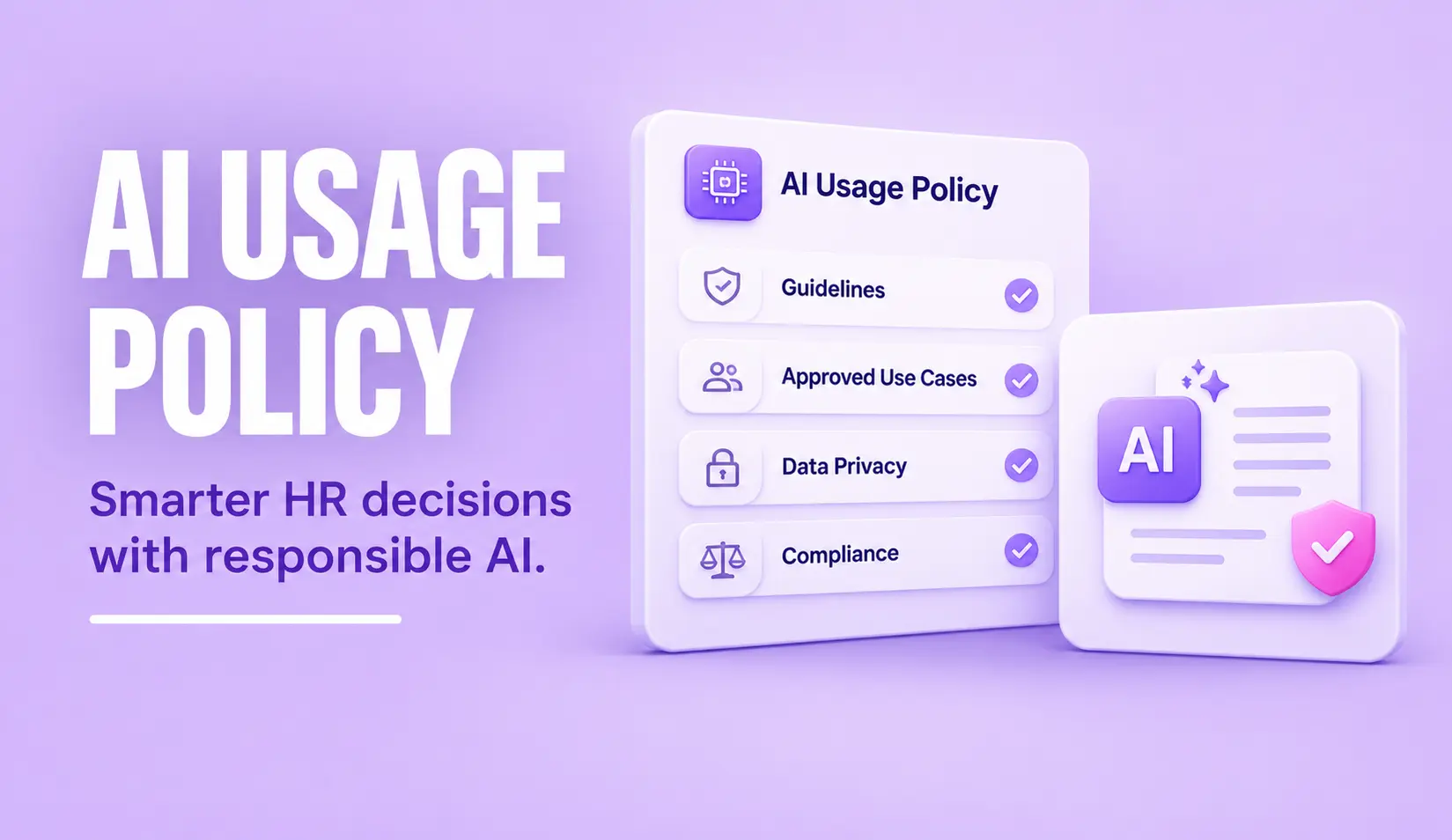
An AI usage policy is a written document that tells employees how they may and may not use AI tools at work. It names approved tools, explains what data can be shared, says when a person must review the output, and sets out what happens if the rules are broken.
An AI policy for companies does not need to be long. You may also see it called an AI use policy, an AI acceptable use policy or a company AI policy. They all describe the same thing: a short, plain set of rules that employees can follow without reading a legal textbook.
A good AI usage policy does four jobs:
- Protects data. It stops personal and confidential information from leaving the company by accident.
- Protects people. It keeps important decisions about hiring, pay and discipline in human hands.
- Gives clarity. Employees know what is fine, what needs approval and what is off limits.
- Creates a record. If something goes wrong, you can show what the rules were and that people were told.
Rules about data, privacy and automated decisions differ by country and industry. Have your legal adviser review the policy before you publish it.
What to Include in an AI Usage Policy for the Workplace
Use this list as the outline for your own AI usage policy.
Purpose and scope
State why the policy exists and who it covers: employees, contractors, interns and anyone using company systems or data.
Approved and prohibited tools
Your AI usage policy should list the tools the company has approved, and say how an employee can request a new one. Be clear that using unapproved tools for work data is not allowed.
Data rules
This is the most important part of any AI usage policy. Spell out what must never be entered into an AI tool, such as employee records, salaries, health information, customer data and confidential plans. Give simple examples so nobody has to guess.
Human review
Say that a person is responsible for everything that leaves the company. AI output must be checked for accuracy before it goes into a policy, a letter, a report or a message to an employee.
Decisions AI must not make alone
Name the decisions that always need a human: hiring, firing, pay, promotion and discipline. AI can inform them. It cannot make them.
Fairness and bias
Require that any tool used in people decisions is tested for unfair results, and that a person reviews outcomes. If a tool cannot be explained, it should not be used for decisions about people.
Transparency
Decide when employees and candidates must be told that AI was used in a process that affects them, and who they can talk to if they disagree with an outcome.
Training and ownership
Name a person or group who owns the policy, answers questions and updates it. Train employees on the rules, with real examples.
Breaches and consequences
Explain how to report a mistake, such as pasting the wrong data into a tool, and what happens next. Make reporting easy and without blame for honest errors, so problems come to light early.
AI Policy Examples You Can Adapt
Think of these as a starter AI policy template. Here is sample wording for three common clauses. Adjust it to your company and have it reviewed.
Approved tools: Employees may use only the AI tools approved by the company for work tasks. Requests for new tools go to the HR and IT teams for review.
Data: Employees must not enter personal data about colleagues, candidates or customers, salary information, or confidential company documents into any AI tool that is not approved for that purpose.
Human review: AI output is a draft. The employee who uses it is responsible for checking it for accuracy and fairness before it is shared or acted on. AI must not be used as the sole basis for any decision about hiring, pay, promotion or discipline.
How to Roll Out an AI Usage Policy in Six Steps
- Find out what people already use. Ask teams which tools they use and why. A short survey is enough. You will likely find more use than you expected.
- Involve the right people. Bring in HR, IT, legal and a few managers. Each sees different risks.
- Write your AI usage policy in plain language. If employees need a lawyer to understand it, they will not follow it. Keep it to a few pages with examples.
- Get it reviewed. Have your legal adviser check it against local rules on data protection and automated decisions.
- Train and communicate. Explain the reasons, show examples and tell people where to ask questions. Add it to onboarding for new joiners.
- Review it regularly. Tools and rules change fast. Revisit the AI usage policy at least once a year, and sooner if a new tool or law affects you.
For help with the format and approval steps, our guide on how to draft an HR policy walks through the process, and our list of essential HR policies and procedures shows where an AI policy fits alongside the others.
AI Usage Policy Mistakes to Avoid
- Banning everything. A total ban usually pushes use out of sight. Approved tools with clear rules work better.
- Writing it once and forgetting it. An outdated policy is as risky as none.
- Vague rules. “Use AI responsibly” tells nobody what to do. Give concrete examples of what is and is not allowed.
- No owner. If nobody owns the policy, nobody answers questions or updates it.
- Skipping managers. Managers set the tone. Train them first.
- Ignoring the data underneath. Rules only work if you know where your people data lives and who can see it. Our guide to improving employee data management is a good place to start.
Final Thoughts
AI is changing human resource management most by changing what HR is responsible for. Employees will keep trying new tools. The teams that handle it well are the ones that set clear, short, fair rules early, explain them, and keep people in charge of people decisions. Start by finding out what is already in use, write a plain AI usage policy, and review it every year.
Frequently Asked Questions
What is an AI usage policy?
An AI usage policy is a written set of rules that tells employees how they may use AI tools at work. It covers approved tools, what data can be shared, when a person must review the output, and what happens if the rules are broken.
Why does a company need an AI policy for employees?
Employees are already using AI tools, often without telling anyone. A policy protects personal and confidential data, keeps important people decisions with humans, and gives staff clear guidance so they do not have to guess.
Who should write the AI policy for a company?
HR usually leads, with input from IT, legal and managers. Each group sees different risks, from data security to fairness to day to day use. A legal adviser should review the final version.
What should an AI acceptable use policy include?
At a minimum: purpose and scope, approved and prohibited tools, data rules, human review, decisions AI must not make alone, fairness checks, transparency, training, ownership and how to report breaches.
How often should an AI policy be updated?
Review it at least once a year, and sooner when you adopt a new tool or when relevant laws or regulations change.


