
One medical emergency can undo years of savings. Your employees know that, and so does every candidate comparing your offer with another. Health insurance is one of the few benefits people use at the exact moment they are most worried, which is why it shapes how they feel about their employer long after the claim is settled.
But “offer health insurance” is not a plan. What should it cover? Who gets covered? How much should the company pay? This guide walks through the choices so you can build a plan that protects people without breaking your budget.
What Are Employee Health Insurance Benefits?
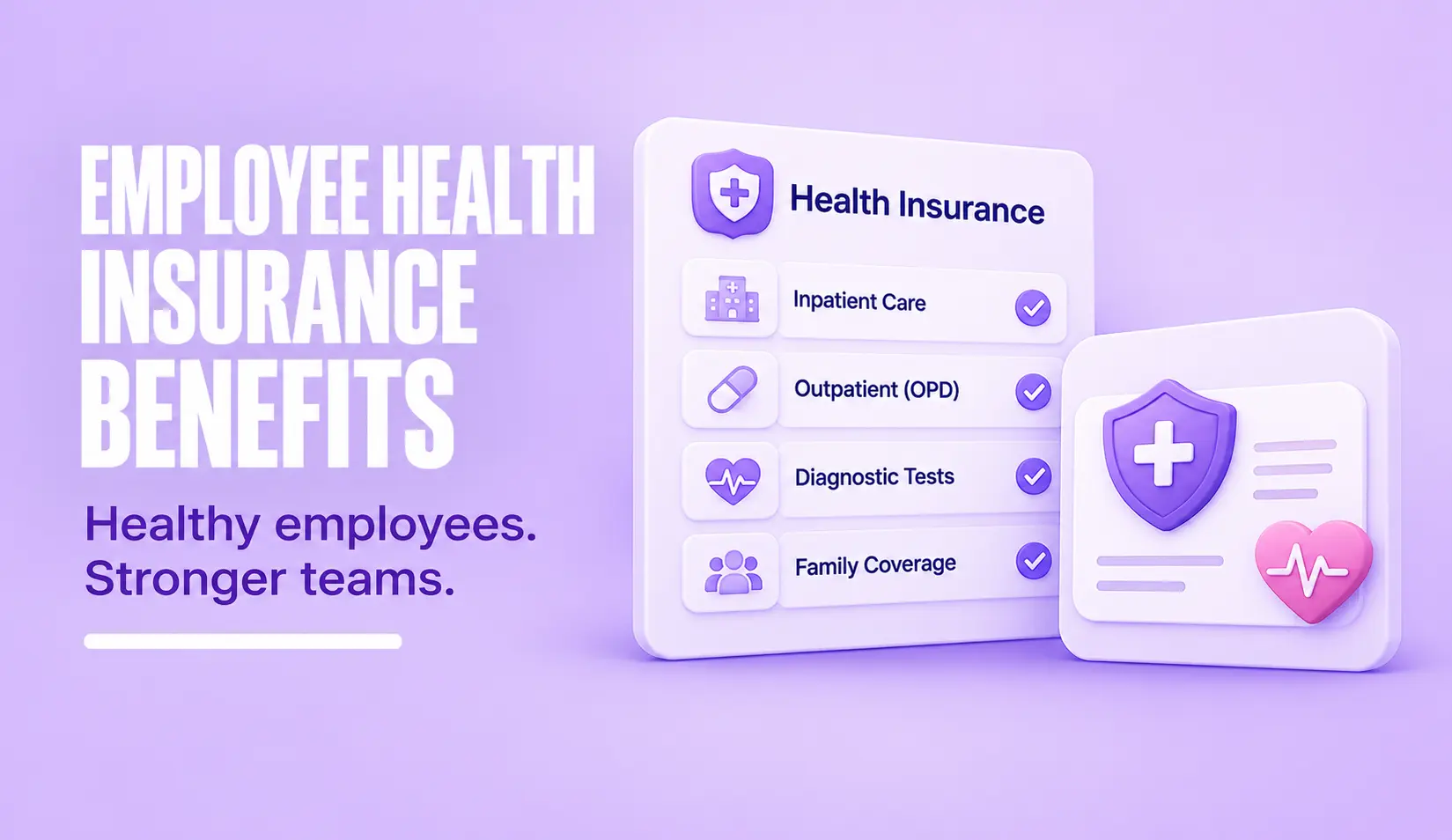
Employee health insurance benefits are medical coverage the employer provides, or helps pay for, so employees can get care without carrying the full cost themselves. Depending on the plan, it can cover hospital stays, doctor visits, medicines, tests, maternity care and sometimes dental, vision or mental health support.
Plans are usually offered in one of two ways:
- Group insurance. The company buys a policy from an insurer for all eligible employees. It is the most common approach and usually costs less per person than individual plans.
- Self funded or reimbursement plans. The company sets aside money to pay approved medical claims directly, or reimburses employees. This gives more control but more risk, so it suits larger or well established organisations.
Rules about what employers must provide vary widely by country and sometimes by employment type. Always confirm legal requirements with a qualified adviser or your insurer before you finalise a plan.
Why Health Cover Matters to Your Business
Good coverage is more than a perk:
- It helps you hire. Candidates often ask about medical cover early in the process.
- It helps people stay. Employees who feel protected are less likely to leave for a small pay difference.
- It reduces financial stress. Staff who are not worried about a hospital bill can focus on work.
- It shows care in a visible way. Few benefits make the message “we look after you” as clear.
What Should Companies Cover? The Core Benefits
If you are building a plan from scratch, start with the essentials.
Hospitalisation
This is the heart of any plan. It covers room charges, surgery, specialist fees, intensive care and the medicines and tests that come with a hospital stay. Check the room category allowed and whether there is a limit per day or per illness.
Outpatient care
Doctor visits, basic tests and prescribed medicines make up most day to day medical use. Many plans cover them up to a yearly limit. It is a benefit employees notice often, so it affects how they rate the plan.
Emergency care
Make sure emergency treatment and ambulance services are covered, including at hospitals outside your usual network where possible.
Maternity and newborn care
Maternity cover is one of the most valued benefits for many families. Check waiting periods, delivery limits and whether complications and newborn care are included.
Pre existing conditions
Many plans restrict cover for conditions that existed before joining. Ask the insurer how these are handled and after what waiting period. Group plans are often more flexible than individual ones.
Optional Benefits That Set You Apart
Once the basics are in place, these additions can make your plan stand out:
- Dental and vision. Routine care that employees use every year.
- Mental health support. Counselling, helplines or therapy sessions. Many employees now expect this.
- Preventive care. Annual check ups and screenings that catch problems early.
- Chronic condition support. Help with long term conditions such as diabetes or high blood pressure.
- Telemedicine. Online consultations for quick, convenient care.
- Wellness programmes. Fitness, nutrition or stress management support.
Who Should Be Covered?
Decide this before you compare prices. The main questions are:
- Which employees are eligible? All staff, or only permanent employees after a probation period?
- What about dependants? Spouses and children are the usual extension. Parents are often a premium add on.
- Who pays for dependants? Many companies cover the employee fully and share the cost for family members.
- When does coverage start? From day one, or after a waiting period?
Whatever you choose, apply it the same way to everyone in the same category, and write it down.
How Much Should the Company Pay?
There is no standard split. Common approaches include:
- Company pays for the employee, employee pays for dependants. Easy to explain and widely used.
- Shared premium. Company and employee each pay a percentage.
- Company pays in full for everyone. The most generous option and the most costly.
- Tiered plans. Employees choose a basic, standard or premium level, with the company paying a fixed amount towards any of them.
Weigh the cost against your budget, your industry and what competitors for your talent offer. A modest plan that is clear and reliable beats a long list of benefits that are hard to use.
How to Choose a Plan in Six Steps
- Ask your people. A short survey shows which benefits matter most, such as maternity, dental or outpatient cover.
- Set a budget range. Include the premium, administration costs and expected growth in headcount.
- Compare more than price. Look at the limits, exclusions, waiting periods, co payments and the size of the hospital network.
- Check claims handling. Ask how claims are filed, how long they take and how many are rejected. A cheap plan that is hard to claim from creates frustration.
- Read the exclusions. Know exactly what is not covered before you promise anything.
- Review each year. Needs change. Review usage, satisfaction and costs every renewal.
Common Mistakes to Avoid
- Choosing on price alone. The cheapest premium often has the lowest limits.
- Poor communication. If employees do not understand their cover, they cannot value it. Explain it in plain language, with examples.
- Ignoring dependants and eligibility rules. Confusion here leads to complaints.
- Forgetting administration. Joiners, leavers, new dependants and payroll deductions all need tracking. Errors here lead to uncovered claims or wrong deductions.
- Never reviewing. A plan that suited fifty employees may not suit two hundred.
Keep Benefits Administration Simple
Every benefit creates admin: who is eligible, who has dependants, what is deducted from each payslip, who joined or left this month. Spreadsheets handle this badly as the company grows.
An HR system keeps those details with each employee record and connects them to payroll, so deductions are correct and changes are not missed. Resourceinn’s payroll management system helps you handle deductions and payslips, and our people management software keeps employee records organised. For a wider view of what to offer, see our guide to employee engagement and employee retention strategies.
Final Thoughts
The right health insurance plan covers the essentials well, adds a few benefits your people truly use, and is easy to understand and administer. Start by asking employees what matters, get clear on eligibility and cost sharing, compare plans on more than price, and review every year. A plan built that way protects your employees and strengthens your business at the same time.
Frequently Asked Questions
What should employee health insurance cover?
At a minimum, hospitalisation, emergency care, outpatient care and maternity benefits. Many employers also add dental, vision, mental health support, preventive check ups and telemedicine to make the plan more useful.
Should employers cover employees’ family members?
Many do, at least spouses and children. A common approach is for the company to cover the employee and share or pass on the cost of dependants. The right choice depends on your budget and local requirements.
Is employer provided health insurance mandatory?
It depends on your country, the size of your company and the type of employment. Check local labour and insurance rules with a qualified adviser before you decide what to offer.
How can small companies offer health insurance affordably?
Start with a group plan that covers hospitalisation and emergencies well, set clear limits, share the cost of dependants, and compare several insurers. Review the plan each year as the company grows.
How often should a company review its health insurance plan?
At least once a year before renewal. Look at claims experience, employee feedback, costs and any changes in headcount or legal requirements.