
A manager stops you in the corridor. “I want Asad gone. He has been late all quarter.” You ask to see the paperwork. There is none. No warnings, no notes, no meeting dates. Just a strong feeling and a lot of frustration.
This is the moment progressive discipline exists for. Without a clear process, a justified decision starts to look unfair, and a fair decision becomes hard to defend. With one, managers know what to do, employees know what to expect, and you can show your work if anyone asks.
This guide walks you through a progressive discipline policy you can adapt, one step at a time.
What Is Progressive Discipline?
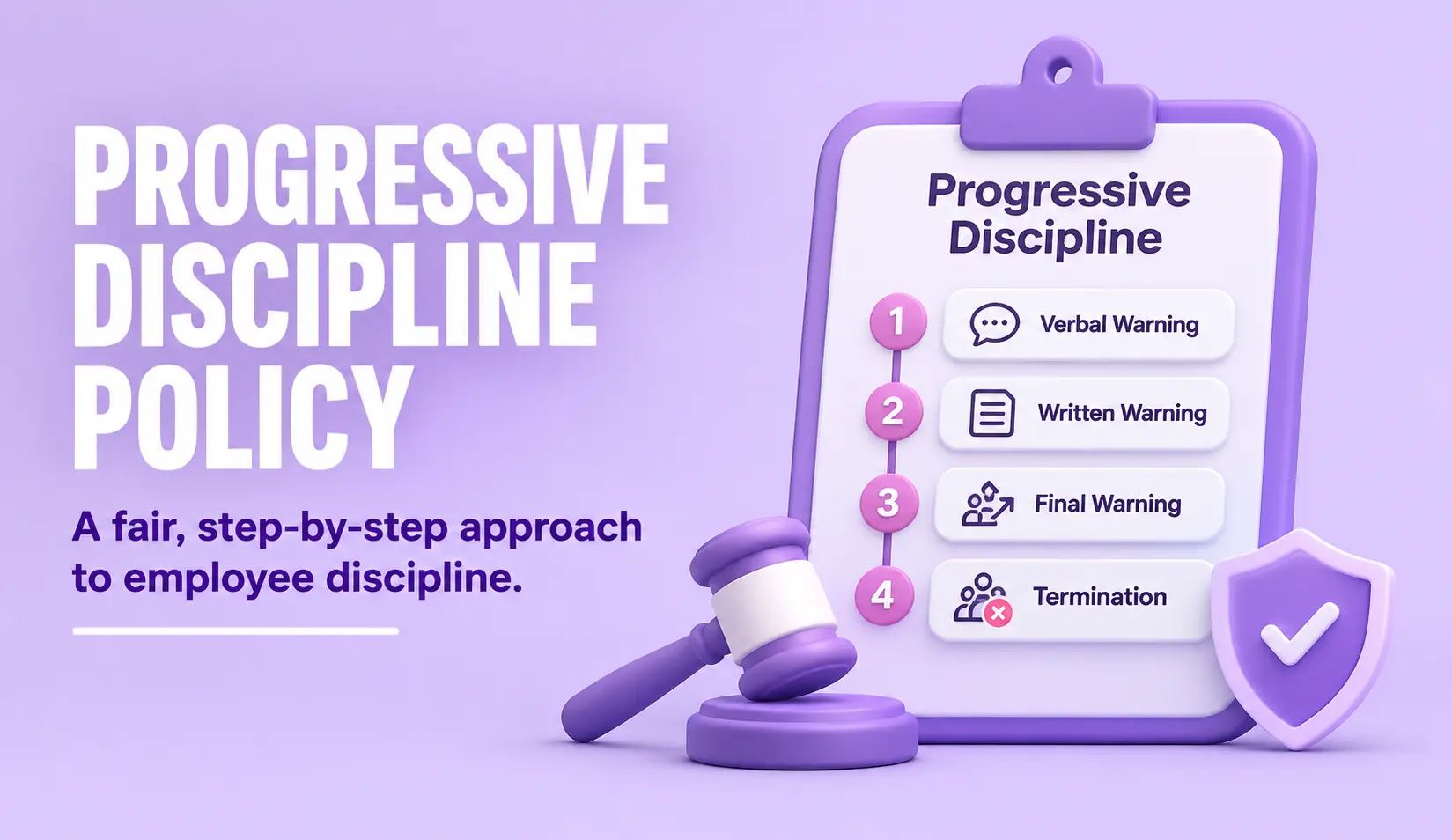
Progressive discipline is a structured way of responding to repeated or serious problems at work. Instead of jumping straight to termination, the employer moves through escalating steps: a conversation, a verbal warning, a written warning, a final warning, and then dismissal if nothing improves.
The idea is simple. Give the employee a clear picture of the problem, a fair chance to fix it, and a record of each attempt. The steps get firmer as the problem continues. Most policies also say that steps can be skipped when the behaviour is serious enough, such as theft, violence or harassment.
Progressive discipline is not about punishment. It is about correction first and documentation always.
Why Every Company Needs a Written Policy
A written policy does five jobs for you:
- Consistency. Two managers should not handle the same lateness problem in two different ways.
- Fairness. Employees can read the rules before they are tested by them.
- Evidence. If a dismissal is challenged, dated records count for more than memory.
- Manager confidence. Many managers delay hard conversations because they do not know what they are allowed to say. A policy gives them a script.
- Better outcomes. Most people who are told clearly what is wrong, and given support, do improve.
One caution before you go further. Rules on notice, warnings and dismissal differ by country and sometimes by contract. Check your local labour law and have a qualified adviser review your policy before you publish it.
The Five Steps of Progressive Discipline
Step 1: The informal conversation
Start with a private, honest chat. Describe what you saw, explain why it matters, and ask for the employee’s side. Many issues end here, because the person simply did not know it was a problem. Make a short note of the date and what was agreed, even if nothing formal follows.
Step 2: The verbal warning
If the issue continues, say clearly that this is a formal verbal warning. Name the rule that was broken, the improvement you need and the date you will review progress. Record the meeting afterwards, with the date, who attended and what was said. A verbal warning that is never written down is easy to deny later.
Step 3: The written warning
A written warning states the problem, the earlier steps, the change you expect, a deadline, and what happens if nothing changes. Give the employee a copy and ask them to sign to confirm they received it. A signature does not mean they agree. It means they were told.
Step 4: The final warning or improvement plan
This is the last chance. For performance problems, many HR teams use a structured improvement plan with clear goals, regular check ins and support such as training. For conduct problems, a final written warning makes the stakes plain. If your policy or local law allows it, let the employee bring a colleague to the meeting.
Step 5: Termination
If the problem continues after a fair process, dismissal becomes a decision you can defend. Review the full file first. Confirm that every step was followed, every record exists, and the employee had the chance to respond. Then hold the meeting, issue a clear termination letter, and handle the final settlement and system access on the same day.
When You Can Skip Steps
Not every problem deserves four warnings. Your policy should list serious misconduct that can lead to immediate action after an investigation. Typical examples include theft, fraud, violence, serious harassment, and safety breaches that put other people at risk.
Even then, do not skip the investigation. Hear the employee’s account, collect the evidence, and decide on facts. Speed is fine. Shortcuts on fairness are not.
What to Include in Your Policy
Use this checklist when you draft:
- Purpose and scope: who the policy covers and what it is meant to achieve.
- Examples: minor issues such as lateness or missed deadlines, and serious misconduct.
- The steps: what each one involves and who delivers it.
- Warning life: how long a warning stays active before it stops counting, for example six to twelve months.
- The right to respond: a clear chance for the employee to explain and to appeal.
- Record keeping: who can see the file and where it is stored.
- A flexibility clause: the company may skip steps when the seriousness of the case demands it.
Here is sample wording you can adapt:
If an employee’s conduct or performance does not meet expectations, the company will normally follow a process of informal discussion, verbal warning, written warning and final warning before dismissal. The company may skip any step where the seriousness of the matter justifies it. Every employee will be given the chance to respond before a decision is made.
Six Mistakes HR Teams Make
- Warning without evidence. “He is always late” is not a record. “Late on six dates this month, listed below” is.
- Treating people differently. Two employees, same offence, different outcomes. This is how unfair treatment claims begin.
- Vague feedback. “Fix your attitude” gives nobody anything to fix. Describe the behaviour and the change you want.
- No follow up. If you set a review date and never hold the review, the warning loses its weight.
- Warnings that never expire. Without an end date, a minor issue from years ago can unfairly shape a current decision.
- Skipping the employee’s side. You may be missing something. A health issue, a family emergency or a workload problem changes the right response.
Keep Your Records in One Place
The best policy fails if the records are scattered across inboxes and notebooks. Attendance data, warning letters, review dates and signed copies should sit next to the employee’s profile.
HR software such as Resourceinn gives you that single place. You can track the attendance and lateness patterns that show whether a problem is real, keep documents with the employee file, and see the full history before you walk into a difficult conversation. If lateness is your main issue, our guide to spotting absenteeism patterns early pairs well with this policy. And if you are writing the policy itself from scratch, start with these essential HR policies and procedures.
Final Thoughts
Progressive discipline works when it is fair, written and consistent. Start with the five steps above, adapt them to your local law, and train your managers to use them. The next time someone says “I want him gone,” you will be able to ask a better question: what does the file say?
Frequently Asked Questions
What is progressive discipline in HR?
Progressive discipline is a process where an employer responds to repeated or serious problems with escalating steps, usually a conversation, a verbal warning, a written warning, a final warning and then dismissal. It gives employees a fair chance to improve and gives the employer a record of each step.
How many warnings should an employee get before termination?
There is no single number. Many policies use three to four steps, but the right number depends on your contracts and local labour law. Serious misconduct can justify skipping steps after a fair investigation.
Can an employer skip steps in progressive discipline?
Yes, for serious misconduct such as theft, violence or harassment. Your policy should say so in writing, and you should still investigate and let the employee respond before you decide.
How long should a warning stay on an employee’s record?
Many companies keep a warning active for six to twelve months and stop counting it if there are no further issues. Choose a period, write it into the policy and apply it the same way to everyone.