
Your restaurant is packed from noon to two, quiet until five, then packed again until close. Paying a full team to wait through the quiet stretch wastes money. Sending people home leaves you short when the rush returns. One answer is to split the day, and on paper it works. In practice, it can wear people down fast. This guide covers what a split shift is, how pay rules work, when it makes sense, and how to schedule it without burning out the people who work it.
What Is a Split Shift?
A split shift is a workday divided into two blocks by an unpaid break that the employer sets. The split shift definition has three parts:
- The employer chooses the schedule.
- The gap is longer than a normal meal or rest break.
- Both blocks fall in the same workday.
If an employee asks for a longer break for personal reasons, it is usually not treated as one.
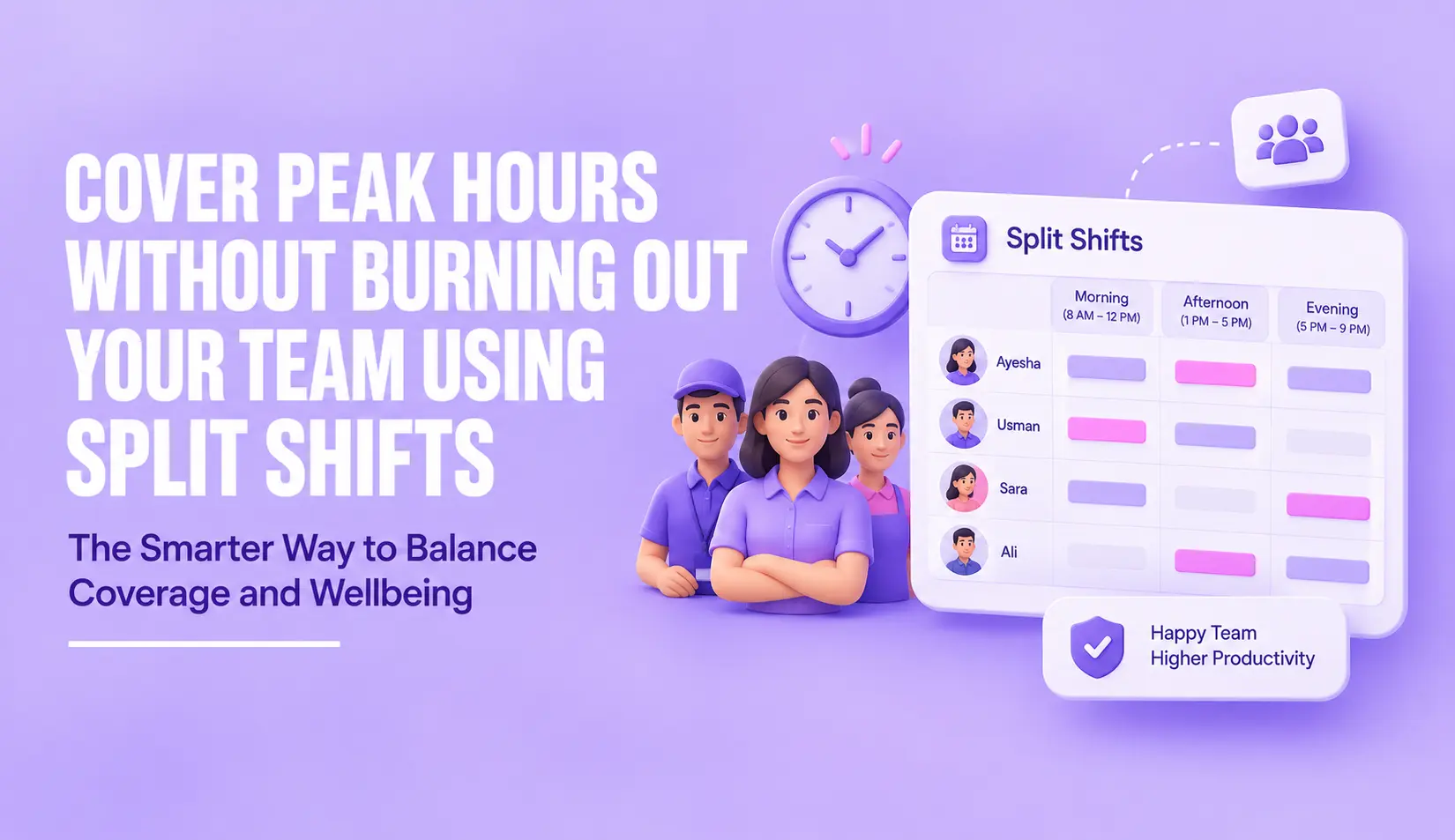
Here is a simple example. A server works 11:00 to 15:00, goes off the clock until 17:30, then works until 22:00. That is 8.5 paid hours spread across an 11 hour day. The business gets cover for both rushes. The employee gives up the whole day to get it. The gap between the first start and the last finish is called the spread, and it is the number people feel most.
Split Shift Examples by Industry
Any team with two busy windows and a quiet gap between them can run this pattern. Common split shift examples include:
- Restaurants: restaurant teams cover lunch and dinner service with the afternoon lull in between.
- Retail: shops that are busy at opening and again after office hours.
- Hospitality: hotels that staff breakfast and dinner service.
- Transport: school bus drivers with a morning run and an afternoon run.
When Splitting the Day Makes Sense
Run this quick test before you put someone on a split:
- Do you have two predictable peaks, with a real lull between them?
- Can the person use the gap, for example by going home or resting nearby?
- Is the commute short enough that the break is worth taking?
- Is the pay fair for the disruption, and is the person willing?
A split works best for people who live close to work and want the middle of the day free. It works worst for people with long commutes, fixed school pickups or a second job. Ask before you assign, because the same schedule can feel like a perk to one person and a penalty to the next.
If most answers are no, look at the alternatives later in this guide.
Split Shift Pros and Cons
What the business gains. You put people where demand is and avoid paying for empty hours. Some staff like it too. They get free afternoons, or fewer days at work each week.
What the employee carries. The day gets long. The gap may be too short to go home and too awkward to use well. Two commutes, childcare and second jobs all get harder. OSHA’s guidance on long and irregular shifts says demanding schedules like these may cause worker fatigue. That guidance covers long and irregular shifts in general, not this schedule alone, so treat it as a warning sign, not proof.
Watch for patterns of absenteeism, more mistakes or higher turnover among the people who work splits most. Those are early signs the schedule asks too much.
Split Shift Rules and How Pay Works
There is no single global rule. Some places require extra pay for these schedules and many do not. In California, for example, California’s Labor Commissioner explains that when an employer sets the split, the worker is owed a premium of one hour at minimum wage. Pay above minimum wage counts toward it, so higher paid staff may be owed less. To check it, add up minimum wage for every hour worked plus one extra hour. If the worker’s pay for the day is lower than that total, the employer pays the difference. A shift an employee picks up voluntarily does not trigger the premium. The premium must also appear as its own line on the pay stub.
In California, the split does not change how overtime pay is calculated, so you still track total weekly hours as normal. Check your own labor law before you copy any of this.
Whatever the law says, write your split shift rules down: the longest gap, the longest total spread, the notice period and who gets first refusal.
How to Schedule Peak Hours Without Burning Out Your Team
Before you build a staff roster around two daily peaks, set limits you can defend. These four habits keep the schedule fair.
Keep the gap short and predictable
Aim for a gap people can use. It should be long enough to eat and rest, and short enough that they do not lose the whole day. Use the same times each week so people can plan childcare, study or errands around them.
Publish early and rotate fairly
Post the roster as early as you can, because a late change is what makes a split hurt most. Offer splits to volunteers first. Rotate the rest so the same people do not get every split, and mix in straight shifts to balance the week. Keep a simple record of who worked how many, so you can show the rotation is fair.
Cap how often one person works them
Set a weekly limit, for example no more than two splits per person. Leave a full night of rest between a late close and the next early start.
Watch hours and absences
Use attendance tracking that records each block separately, so total hours and overtime stay accurate. Then review absence and lateness for the people on splits every month.
What to Try Instead
A split schedule is a tool, not a default. Before you use one, try staggered start times, a small peak crew of part-time staff, or overlapping shifts. You can also offer flexible working hours so people choose a pattern that fits their life. Each option has a cost, so compare them against the wages you would pay for the quiet hours. Often a short overlap between two crews is cheaper than the turnover that follows a hard schedule.
Track Hours in Your HR System
Whatever system you use, check that it can do five things:
- Record each block as its own clock in and clock out.
- Add up the day’s hours and the week’s overtime.
- Flag a gap longer than your maximum.
- Show managers one roster for every branch.
- Itemize any premium on the payslip.
Spreadsheets and paper registers tend to fail at the payroll step first, because totals have to be rebuilt by hand at the end of every pay period. Used sparingly, fairly and with accurate records, this pattern covers your peaks without costing you your best people. Start with one team, set the limits above, and review the results after a month.
Frequently Asked Questions
What is a split shift at work?
It is a workday divided into two blocks by an unpaid break that the employer sets. The break is longer than a normal meal break. For example, a restaurant server might work the lunch rush, go off the clock for a few hours, then return for dinner.
What are the rules for split shifts?
There is no single global rule. Some places, such as California, require extra pay when an employer sets the schedule. Many other places set no special premium. Check your local labor law and contracts first, then write the rules into your scheduling policy so every manager applies them the same way.
Are split shifts illegal in California?
No. California does not ban them. When an employer sets one, the employee may be owed a premium of one hour at minimum wage, reduced by any pay earned above minimum wage that day. A break the employee asks for personally is not treated the same way.
Is working a split shift hard?
It can be. The gap is hard to use well, the day stretches from first start to last finish, and travel can eat the break. Predictable rosters, fair rotation and a cap on how often one person works them make it easier to handle.
Is a split shift the same as a double shift?
No. A double shift is two shifts worked back to back with little or no break. A split has a long unpaid gap between its two blocks. The gap is what sets it apart.
What industries commonly use split shifts?
Restaurants, retail, hospitality and transport use them most because demand peaks twice a day. Any team with two clear rush periods and a quiet gap between them can use one. It works best where staff can use the break, for example by going home.