
Introduction
When evaluating an hr consultant vs in-house hr career, most advice treats them as two separate tracks you have to pick between. Having actually moved between them, I don’t think that’s quite right. Each one made me better at the other, in ways that only became obvious once I’d done both.
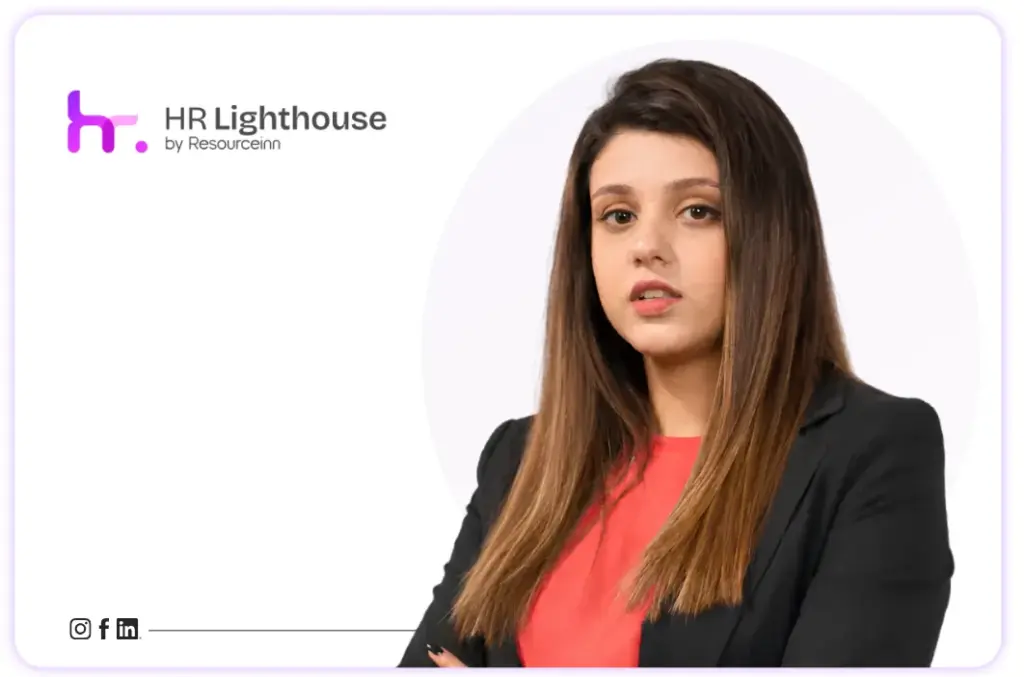
I’m Hadiqa Bukhari, HR Manager at PureLogics in Lahore, and my path here wasn’t a straight line up one company’s ladder. I spent almost three years as Assistant Manager HR at vivo Pakistan, leading end-to-end HR operations for a large team. Then I stepped out into HR consulting, working with an organization as an outside advisor instead of an employee. Now I’m back in-house, running HR for PureLogics full-time.
What In-House HR Teaches You That Consulting Can’t
At vivo Pakistan, I led end-to-end HR operations, talent acquisition, performance management, payroll, and employee lifecycle processes, while managing a team of HR Executives. Being in-house for that long means you don’t just design a policy instead, you live with it. You see what happens six months after a performance management process launches, not just how it looks on the day you roll it out. You manage the same people through multiple cycles, so you carry the consequences of your own decisions in a way a consultant rarely does.
That kind of ownership is hard to fake, and it’s hard to fully understand from the outside. It’s also easy to lose sight of once you’re not doing it day to day.
What Consulting Teaches You That In-House Can’t
Moving into HR consulting changed how I saw the job. As a consultant, I partnered with an organization to provide strategic HR guidance across talent acquisition, employee relations, and HR operations but always as an outside voice, brought in specifically because I wasn’t tangled up in the internal politics and history that make change hard from the inside.
That distance is valuable in a way it’s easy to underestimate when you’ve only worked in-house. An internal HR team often knows exactly what’s wrong with a process but can’t get traction fixing it, because everyone involved has history with the decision that created the problem in the first place. A consultant can say the same thing an internal HR manager has been saying for a year, and suddenly it gets acted on. That was a humbling thing to learn from the other side: sometimes the best thing you can offer isn’t a new idea, it’s simply not being the person who has to sit in the same room as everyone tomorrow.
Why I Went Back In-House
Consulting taught me to diagnose problems quickly and speak plainly about what needed to change. But it also meant I rarely got to see whether my recommendations actually worked once I moved on to the next engagement, I’d hand off a plan and move on, without ever finding out if it survived contact with the organization’s actual day-to-day. Going back in-house at PureLogics as HR Manager, leading strategic HR initiatives, talent acquisition, and employee engagement, was partly a decision to trade that outside vantage point for the chance to see decisions through to their consequences again.
I don’t think one path is better than the other, and I’m suspicious of anyone who tells you it is. They’re teaching you different halves of the same skill. Consulting sharpens your ability to see a problem clearly and say so directly. In-house work sharpens your ability to live with a decision long enough to know if it actually worked.
What I’d Tell Someone Choosing Between Them
The honest answer is that the choice matters less than people think, as long as you’re paying attention to what each side is teaching you. If you’ve only ever worked in-house, a stint doing HR consulting, even a short one, will change how directly you’re willing to name a problem, because you’ll have seen what it looks like to say the hard thing without worrying about the internal fallout. If you’ve only ever consulted, going in-house even once will change how carefully you think through a recommendation, because you’ll actually have to live with what happens after you make it.
Building people-first workplace cultures and developing high-performing teams requires both instincts. The outsider’s willingness to name what’s broken and the insider’s patience to see a fix through. Most HR careers only build one of those muscles. Moving between the two, even briefly, is one of the more reliable ways to build both, and I’d rather have moved between them than stayed comfortably on one side for my whole career.
If you’re one of the HR professionals across Pakistan weighing your own next move between in-house HR and consulting, join the HR Directory to build your visibility on the platform.
Frequently Asked Questions
What’s the real difference between HR consulting and in-house HR?
In-house HR means living with the long-term consequences of your own decisions across multiple cycles with the same team, while HR consulting means bringing outside perspective and directness to problems the internal team may already see but can’t get traction fixing due to internal history and politics.
Who is Hadiqa Bukhari?
Hadiqa Bukhari is an HR Manager at PureLogics in Lahore, Pakistan, with experience in talent acquisition, HR operations, employee relations, and HR consulting.
Where has Hadiqa Bukhari worked in both in-house HR and consulting roles?
Hadiqa Bukhari worked in-house as Assistant Manager HR at vivo Pakistan, then as an HR Consultant, and now works in-house again as HR Manager at PureLogics.
Why does moving between in-house HR and consulting matter for an HR professional’s career?
It matters because each path builds a different skill that the other doesn’t naturally develop. While consulting sharpens the ability to diagnose problems clearly and speak directly, in-house work builds the patience to see decisions through and learn from their real consequences over time.