
Employee lifecycle management is the practice of planning, running, and improving every stage of a person’s time with an organization, from the first hiring conversation to the final exit. In my role as a senior HR manager, I have handled the whole journey, and the main thing I have learned is that each stage sets up the next. A weak onboarding shows up later as an engagement problem, and a rushed exit leaves compliance gaps behind.
This is how I think about managing the lifecycle, stage by stage, for HR teams who want to treat it as one connected process instead of a set of separate tasks.
What employee lifecycle management means in practice
An employee’s journey has a recognizable shape. People are attracted to an organization, recruited, onboarded, developed, retained, and eventually leave. Employee lifecycle management means giving each of those stages a clear owner, a clear process, and a clear link to the next one.
At Practice Pathways, I managed the employee lifecycle from recruitment to exit, with a focus on compliance, engagement, and performance management. In my current role at DataQ Health, my responsibilities cover end-to-end HR operations, including talent acquisition, employee engagement, performance management, and compliance, across offices in Karachi and Islamabad. The scope has grown, but the principle is the same: HR works best when it sees the whole journey.
Stage 1: Attraction and recruitment
The lifecycle starts before anyone applies. How an organization presents itself, and how clearly it describes the work, shapes who shows up. Recruitment then turns that interest into a hiring decision.
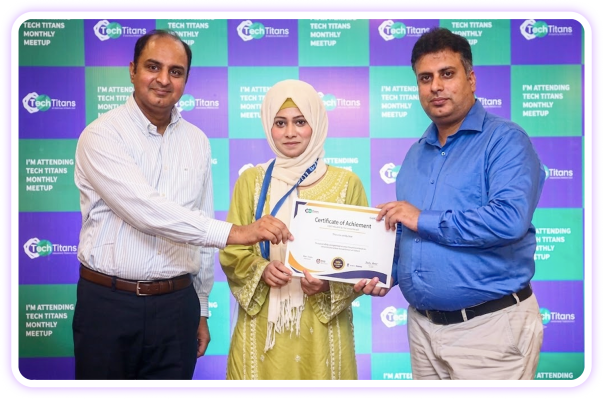
The foundation of good recruitment is a clear understanding of the role. I completed a Certificate of Job Analysis and Design from HR Legends Pakistan in 2022, and it changed how I approach hiring. When a role is properly analyzed, the job description and the person specification say what the job genuinely involves. That makes screening fairer, interviews more focused, and expectations clearer from the first conversation.
What I look for at this stage:
- A role description that matches the real work.
- A hiring process that is consistent from one candidate to the next.
- A candidate experience that reflects the culture the person is about to join.
Stage 2: Onboarding
Onboarding is where the organization keeps its first promise. Earlier in my career, at Jubilee Life Insurance Company Ltd, my work included onboarding, employee records management, and HRMS administration. That experience taught me that onboarding is both a human process and a records process, and both matter.
On the human side, a new joiner should know their role, their team, and what is expected in the first weeks. On the records side, documents, personal details, and policy acknowledgements should be complete and accurate from day one. Gaps in either create friction that is hard to fix later.
Stage 3: Performance and development
Once people are settled, the focus moves to doing the work well and growing. Performance management and development sit together here, because feedback only means something when it connects to support.
My approach rests on three habits:
- Set expectations early and plainly. People perform better when they know what good looks like.
- Give feedback regularly. A conversation held during the year is more useful than a surprise at the end of it.
- Link development to the role and the person. Learning works best when it is relevant to the work and to where the person wants to go
Stage 4: Engagement and retention
Engagement is not a separate project. It is the result of how every other stage is handled. People stay when they feel clear about their work, fairly treated, heard when they raise a concern, and able to grow.
This is why I treat employee relations as a core part of lifecycle management. How concerns are handled, how conflict is resolved, and how policies are applied all signal what the organization values. I take the view that consistent, respectful handling of ordinary issues does more for retention than any single initiative.
Stage 5: Compliance across the whole journey
Compliance does not belong to one stage. It runs through all of them. Hiring has to follow policy, onboarding has to document the employment relationship properly, performance processes have to be fair and recorded, and exits have to be handled correctly.
HR compliance is one of my listed areas of expertise, and I have formal training in it. Knowing the rules that govern employment helps me design processes that are fair to employees and defensible for the organization, instead of treating compliance as an afterthought at the end.
Stage 6: Offboarding
Exits are part of the lifecycle too, and they deserve the same care as hiring. A well-run exit protects the organization, treats the person with respect, and produces useful information.
A good offboarding process covers:
- A clear handover of work and responsibilities.
- Completion of records, documentation, and any required clearances.
- A conversation that gives the departing employee space to share their experience honestly.
The feedback from those conversations is valuable. It points back to earlier stages, showing where hiring, onboarding, development, or engagement could be stronger. This is what makes the lifecycle a loop and not a line.
Making the lifecycle manageable
Managing every stage well requires organized information. Records, approvals, and employee data need to be kept accurate and easy to find. Working with HRMS platforms early in my career showed me how much smoother each stage runs when information is centralized and processes are consistent.
Beyond systems, the biggest factor is mindset. Ask of every HR task: which stage of the journey is this, and what will it affect next? That question alone improves decisions.
Common mistakes to avoid
- Treating stages as separate silos. A problem in one stage usually has its roots in the one before.
- Putting all the effort into hiring. Onboarding, development, and engagement decide whether a good hire stays and succeeds.
- Leaving compliance to the end. It needs to be built into each stage.
- Ignoring exits. Offboarding feedback is one of the most honest sources of insight an HR team has.
Bringing it together
Employee lifecycle management comes down to seeing the whole journey and caring about every stage of it. Define roles clearly, onboard with intent, support performance and growth, keep people engaged, build compliance into the process, and learn from every exit.
I would encourage fellow HR professionals to share how they approach this in their own organizations. You can read more about my background on my HR Directory profile, and if you work in HR, you can join the HR Directory and share your own experience with the community.
Frequently Asked Questions
What is employee lifecycle management?
Employee lifecycle management is the practice of planning, running, and improving every stage of an employee’s time with an organization, from recruitment through onboarding, development, and retention to exit. It treats the journey as one connected process so that each stage supports the next.
What are the stages of the employee lifecycle?
The employee lifecycle is commonly described as attraction and recruitment, onboarding, performance and development, engagement and retention, and offboarding. Compliance runs through all of these stages rather than sitting in just one.
Why is employee lifecycle management important?
Managing the lifecycle as a whole helps HR spot where problems begin, keeps processes consistent and compliant, and improves the experience people have at every stage. Strong early stages tend to support engagement and retention later, and feedback from exits shows where earlier stages can improve.
How can an HR team start managing the employee lifecycle?
An HR team can start by mapping the stages employees go through, assigning a clear owner and process to each one, and keeping employee records accurate and centralized. From there, the team can review each stage regularly and use feedback, especially from exit conversations, to improve the stages that came before.