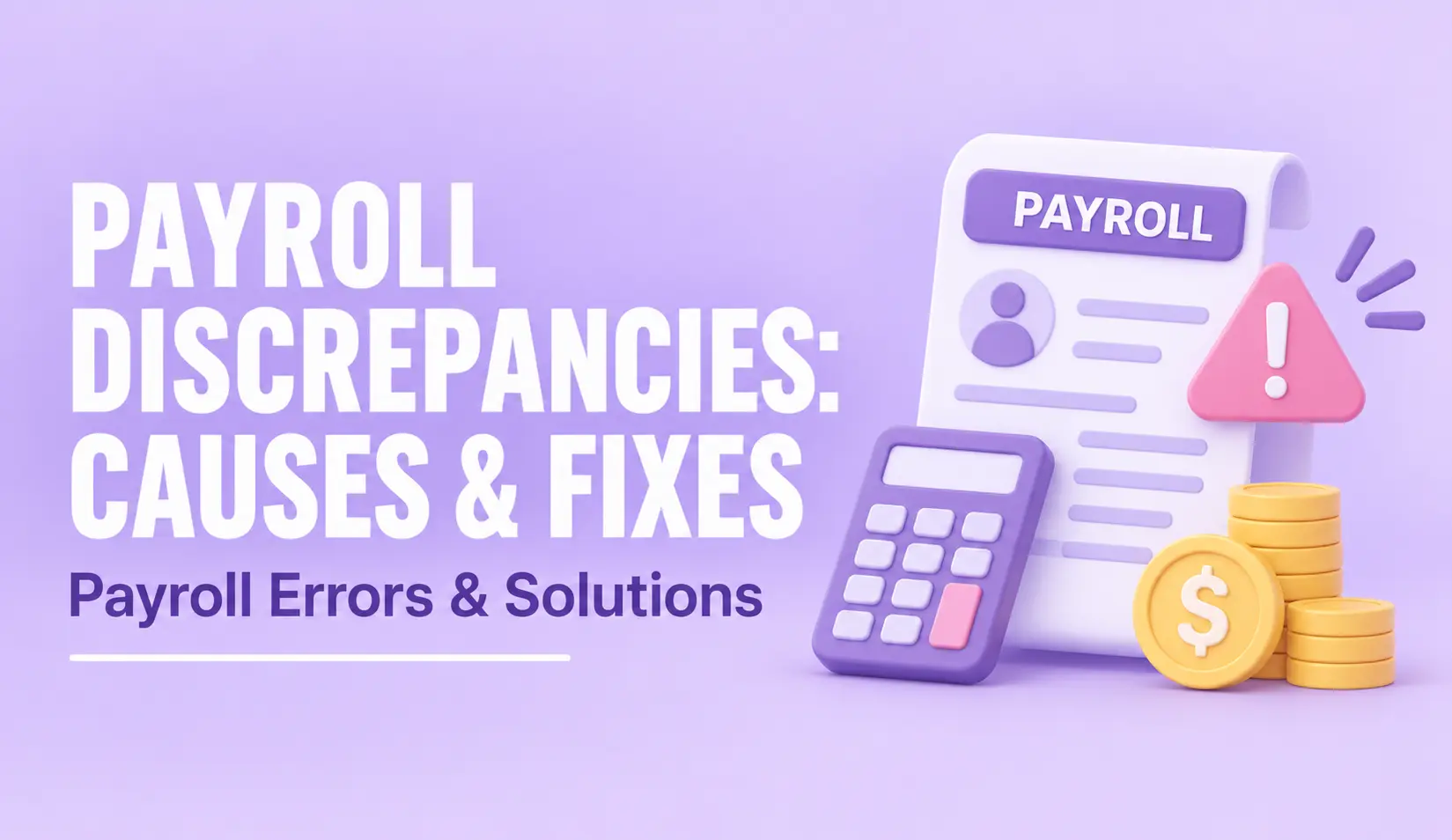

An employee opens a payslip and the number is wrong. Overtime is missing, or a loan deduction ran twice. Now HR is chasing a payroll discrepancy on payday evening while finance asks who changed what.
A payroll discrepancy is rarely a one-off slip. It usually comes from a gap between systems, a late change, or a manual step nobody checked. This guide covers the root causes, how to catch each problem before payday, and how to fix payroll errors once they have reached an employee’s account.
What Is a Payroll Discrepancy?
A payroll discrepancy is any gap between what an employee earned and what the payroll run paid them. The gap can run in either direction. An underpayment leaves the employee short. An overpayment sends out money the company must later recover.
Payroll discrepancies show up in three places:
- Gross pay: hours, rates and allowances.
- Deductions: tax, insurance, loans and advances.
- Net pay: the final amount transferred to the bank.
A paycheck discrepancy reported by an employee is usually the visible end of an error that began earlier, in attendance data, leave records or employee master data.
HR teams also say payroll errors or payroll mistakes. The terms overlap. The discrepancy is the mismatch. The error is the cause behind it. Trace the mismatch back to its source instead of patching the number, and the same problem stops returning every month. For a short explanation of the basics, see our definition of payroll in the glossary.
Root Causes of Payroll Discrepancies
Most payroll discrepancies trace back to six causes. Each one has a different owner, which is why payroll errors often bounce between HR, finance and line managers without a clear fix.
Attendance and leave changes after the cut-off
A manager approves a missed punch on the 26th, but payroll locked on the 25th. The employee is paid from the old record. This is a frequent reason payroll adjustments pile up in the next cycle, and it is a recurring question in HR forums.
Overtime and variable pay
Overtime, shift allowances, commissions and bonuses follow rules that change by contract and role. When someone calculates them by hand, a wrong multiplier is easy to miss. Clear overtime tracking settles how many hours qualify before payroll starts.
Manual entry and spreadsheets
Every re-typed figure is a chance for a typo. A transposed digit in a bank account or a wrong row in a spreadsheet creates payroll errors that no one sees until the employee complains.
Deduction and tax setup
A deduction taken before tax when it belongs after tax changes taxable pay. Rates and slabs also change during the year. Review your post-tax deductions and tax tables every time a rule changes.
Employee data changes
Promotions, transfers, new bank details, joiners and leavers all change pay. A leaver left active in the system keeps getting paid. A mid month joiner needs a pro-rated salary, and a wrong day count creates a gap.
Grade and policy mismatches
An employee placed in the wrong grade, or a policy applied to the wrong group, produces a consistent error every month. These are the hardest to spot because the number looks normal each time. They usually surface only when the employee compares a payslip with a colleague’s, or when an audit samples a few records.
How to Find a Payroll Discrepancy Before Payday
A clear payroll process puts review checks at fixed points. Run these five before you release the bank file:
- Compare with last month. Flag any employee whose net pay moved by more than a set percentage. Agree the threshold with finance, and ask for a reason on every flagged line before approval.
- Reconcile headcount. Match joiners, leavers and unpaid leave against HR records.
- Match inputs to totals. Check that attendance, overtime and leave totals in payroll equal the approved figures.
- Check deduction totals. Compare tax, insurance and loan totals with the statements from each provider.
- Get a second sign off. One person prepares the run. A different person approves it.
How to Fix Payroll Errors and Make Payroll Corrections
The fix depends on which way the error ran.
Underpayment. Confirm the amount, then pay the difference as soon as possible. Many employers add it to the next regular run. If the shortfall is large, an off cycle payment is fairer to the employee. Labour law sets deadlines for wages owed, so check the rule in your country.
Overpayment. Tell the employee in writing and show the calculation. Agree a recovery plan together. Rules on deducting from wages differ by country, and some require written consent, so confirm with legal counsel before you recover anything.
Tax and statutory errors. If an error touched tax or contributions, the earlier filing may need an amendment with the relevant authority.
Payroll corrections work best when one person owns them. Without an owner, the same case gets fixed twice or not at all, and the employee gets two different answers from HR and finance.
Every payroll correction needs a record. Log the employee, the pay period, the amount, the cause and the approver. Keep payroll adjustments on a separate payslip line so the employee can see what changed and why.
Then fix the cause upstream. A correction that does not change the data or the process only repeats next month.
How to Prevent Payroll Discrepancies From Repeating
Prevention comes down to fewer hand offs and fewer late changes.
- Use one source of data. When attendance, leave and pay sit together, approved hours reach payroll without re-keying. An attendance management system connected to payroll removes the most common source of mismatch.
- Publish a cut-off calendar. Tell managers the date for attendance and leave approvals. Late changes then move to the next cycle by rule, not by surprise.
- Add approval steps. A payroll management system with review and approval stages keeps one person from changing and releasing the same run.
- Keep an audit trail. You should be able to see who changed a rate, a deduction or a bank detail, and when.
- Review errors monthly. Count corrections by cause. The cause that appears most often is your first fix.
Start this week with one task. Pull last month’s corrections and tag each by cause. That list shows where your next payroll discrepancy will come from.
Frequently Asked Questions
What happens when payroll makes a mistake?
The employee is paid too little or too much. Underpayments can break wage laws, hurt trust and lead to claims. Overpayments must be recovered fairly. Either way, confirm the error, tell the employee, correct the pay and record the cause so it does not repeat.
What is a payroll adjustment?
A payroll adjustment is a change entered in a later pay period to correct or update an earlier payment. It can add missed pay, such as overtime, or take back an overpayment. Show it as a separate line on the payslip.
How can I correct a payroll error?
Find the cause, confirm the amount and decide the direction. Pay an underpayment in the next run or in an off cycle payment. Agree a recovery plan for an overpayment. Record the correction, then fix the data or process behind it.
What are payroll anomalies?
Payroll anomalies are results that look unusual compared with normal patterns. Examples are a sudden jump in net pay, a duplicate payment or pay for an employee who left. They are warning signs. Each one needs a check to decide whether it is an error.
Why do payroll discrepancies increase when attendance is corrected after payroll runs?
The payroll run used the old attendance record. When someone corrects it after salaries are processed, pay and records no longer match. A set cut-off date and a rule that late changes move to the next cycle prevent most of these cases.