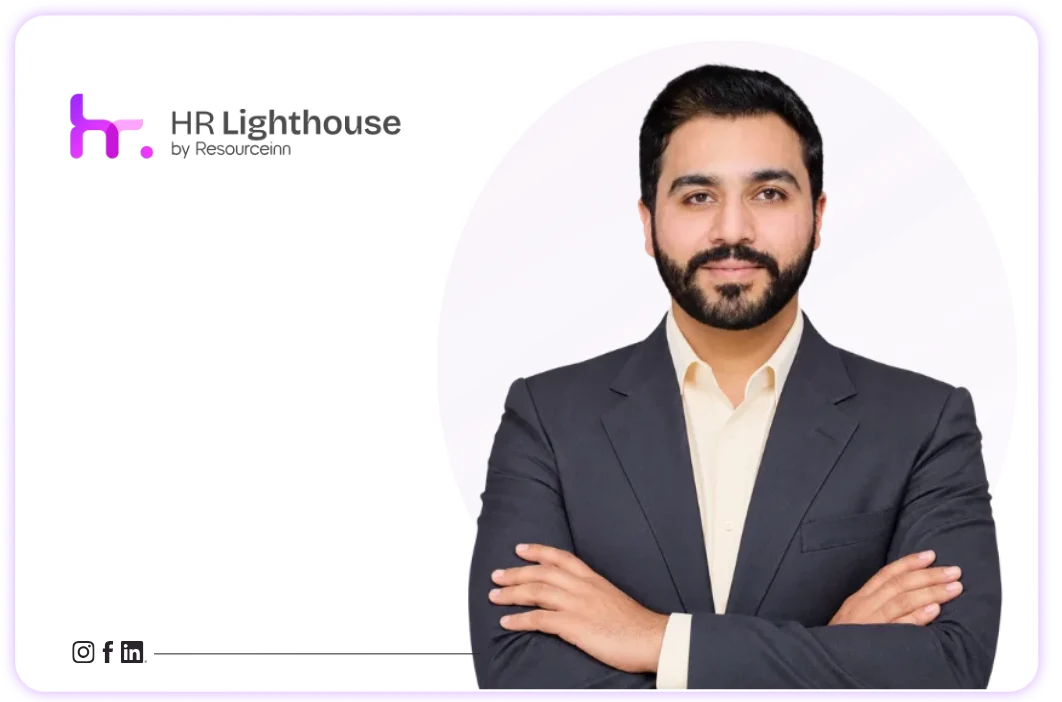

I’m Muhammad Shahzad, Human Resources Director at Greybeard Automation & Outsourcing in Islamabad, and offshore team management looks very different from where I sit, running HR for the Pakistan office of a UK-based BPO firm, than it does in most guides written for the home-office manager. The usual advice assumes you are the one setting priorities from headquarters and wondering how to keep a distant team on track. I’m on the other side of that relationship, responsible for the people who are doing the work.
That position has taught me that most offshore problems are not really about distance. They are about translation. A parent company thinks in its own priorities, language, and calendar, and a local team lives under different labor rules, different expectations, and a different working day. Someone has to sit in the middle and make both sides make sense to each other, and in my case that someone is HR.
What Offshore Team Management Looks Like from the Local HR Seat
Offshore team management is the work of coordinating, supporting, and developing a team in one country on behalf of an organization based in another. From headquarters, that tends to be described as a communication problem: time zones, tools, and meeting schedules. From the local office, it is closer to a stewardship problem, because the people you manage need to feel that they belong to one company, not a back office that sits outside it.
In practice, my role covers the full employee experience for the Pakistan office. That means developing HR strategies that support business objectives across Finance, Procurement, Engineering, and Sales, which is four very different kinds of work with four very different kinds of people. A hiring plan for engineering has little in common with one for procurement, and performance expectations in sales don’t look like those in finance. The parent company sets the direction. I make sure the local organization can actually deliver on it.
Where the Parent Company and the Local Office Need Translation
The gap shows up in small, ordinary places. A target set at headquarters assumes a certain pace of hiring that the local market may or may not support. A policy written for one country may not map cleanly onto the labor environment in another. A performance conversation that works well between colleagues in the same office can land very differently when it is mediated through a call and a shared document.
None of this means either side is wrong. It means the work of alignment is continuous and has to be owned by someone. When nobody owns it, the parent company ends up frustrated that the offshore office is slow to respond, and the offshore team ends up frustrated that headquarters doesn’t understand their constraints. Both complaints are usually accurate, which is exactly why they don’t resolve themselves.
How I Keep Both Sides Aligned
Translate Business Objectives into Local HR Plans
When the business sets a goal, I try to turn it into something specific for each function before it reaches the team: what roles it affects, what skills are needed, what timeline is realistic given the local hiring market, and what support managers will need. Handing a team an objective without that translation is how targets end up feeling arbitrary to the people expected to hit them.
Put Local Compliance First
An offshore office still operates under local employment rules, and headquarters can’t be expected to know them in detail. I treat compliant HR operations as non-negotiable, because a shortcut that saves a week for the parent company can create a problem for the local entity that lasts years. Being clear about those boundaries early, and explaining the reasoning, tends to earn more trust than quietly working around them.
Make Offshore Employees Feel Part of One Company
Engagement is harder when the people who make decisions are in another country. I put real effort into making sure the Pakistan team hears the same news, understands the same goals, and has the same visibility into how their work connects to the wider business as colleagues elsewhere. Employees who see where their work lands are far more likely to stay and to care about quality than those who only see a queue of tasks.
Agree on Performance Measures Both Sides Trust
Performance management breaks down quickly when the two sides measure success differently. I push for expectations that are written down, specific, and shared, so that a rating given in one country isn’t a surprise to the people reviewing it in another. When both sides trust the measure, conversations about performance become about improvement instead of about whose view of the facts is right.
Where Things Go Wrong
The most common failure I see is treating the offshore office as a cost line instead of a team. When that happens, communication becomes transactional, development stops, and the best people quietly leave for employers who treat them as more than capacity. The second most common failure runs in the opposite direction: local leadership shielding the team so thoroughly from headquarters that the two sides drift apart. Good offshore management sits between those extremes, with honest, regular contact in both directions.
Closing Thoughts
After years of running HR across BPO, logistics, and civil aviation, the lesson that has held up best is that offshore team management succeeds or fails on trust. A team that trusts its leadership, and a parent company that trusts its local office, can handle almost any logistical difficulty. Without that trust, even the best tools and processes only produce faster misunderstandings.
If you’re one of the HR professionals across Pakistan building toward milestones of your own, join the HR Directory to build your visibility on the platform.
Frequently Asked Questions
What is offshore team management?
Offshore team management is the practice of coordinating, supporting, and developing a team located in one country on behalf of an organization based in another, covering communication, expectations, performance, and employee experience.
Who is Muhammad Shahzad?
Muhammad Shahzad is the Human Resources Director at Greybeard Automation & Outsourcing in Islamabad, Pakistan, with 18+ years of experience in recruitment, performance management, employee relations, and HR policy development across the BPO, logistics, and civil aviation sectors.
What does Muhammad Shahzad do to align local HR with a foreign parent company?
He translates the parent company’s business objectives into function-specific HR plans, keeps local compliance non-negotiable, works to make offshore employees feel part of one company, and agrees on written performance measures that both sides trust.
Why does offshore team management matter for HR professionals?
HR sits between the parent company and the local team, so it often owns the alignment work that keeps an offshore office engaged, compliant, and productive. Without that role, misunderstandings between the two sides tend to go unresolved.