What is a Reward Strategy?
Reward strategy is a strategic plan that defines how an organization shall motivate its workforce in the accomplishment of organizational objectives. It entails the process of developing and administering reward systems within an organization. This can include various types of reward in HRM, such as salaries, bonuses, benefits, and non-monetary rewards.
For instance, an organization in the technological field may provide competitive salaries packages, operations bonus for the fiscal year depending on the results achieved, medical insurance package, and opportunities for professional development to attract and retain top talent.
Why Does a Company Need a Reward Strategy?
We all want to work in a domain where we feel we are honestly making a difference, one that motivates us and makes us feel cherished. We also want to work with a team leader who takes the time to develop and inspire us – recognizing our capabilities and productivity output.
The best optimum reward strategy can help you achieve this for your employees, using benefits, bonuses, and pay to encourage employee loyalty. Motivated staff with boosted morale will tend to go the extra mile to contribute to organizational success and fruitful results. A fortunate environment will inevitably attract the best talent, make existing employees feel rewarded, and help retain your key people.
A reward strategy that reflects your organization’s culture will enable you to achieve your organizational strategic goals and objectives. Extensive exploration shows that having a defined reward strategy helps organizations attain better financial outcomes than those who choose not to do so. Furthermore, a thoughtfully designed reward strategy plays a crucial role in improving employee retention, which in turn significantly contributes to these positive financial outcomes.
Pro Tip:
Regularly review and update your reward strategy to align with changing employee needs and market trends.
Statistics:
- According to a 2024 survey by the Society for Human Resource Management (SHRM), companies with a comprehensive reward strategy reported a 20% higher employee retention rate.
- Organizations with effective recognition programs see employee productivity increase by 14% compared to those without such programs
What Should a Reward Plan of Action Consider?
A premium reward strategy will consider more than pay, so it is of pivotal importance to do more than furbish the local press to find out what the market is paying. Organizations can get just as much, if not more, from non-monetary rewards than the financial ones.
A total reward perspective looks at what your organization is trying to attain, what your people opt for, what is affordable, and the structures needed to fulfill this. We base our point of view on the four pillars of workplace fulfillment, which covers the following areas:
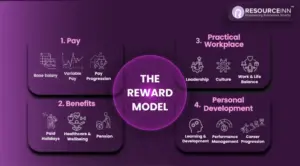
1. Pay
Every organization must pay its employees for their services. This includes both prearranged (salary and other allowances) and variable (bonus and incentives) pay. The cash compensation provided to employees increases over time and can be linked to several different factors, such as performance or career development.
2. Benefits
Organizations use benefits to supplement the cash compensation they provide to employees. These vary depending on the organization’s size and cost, providing a sense of protection and comfort to the human capital and their guardians. Benefits include medical cover, holidays, pension schemes, and income protection.
3. Practical Workplace
A positive working environment can often be a defining factor in retaining key talent in a competitive market. Ultimately, we all intend to work in an environment where there is a genuine feeling of team spirit and togetherness, with a leader who inspires and supports us to achieve success at work and home.
4. Personal Development
Allowing personal and professional career growth opportunities to the workforce is an important part of any strategic HR reward plan. These can be skills attained on the job and formal training programs valued by employees that also serve the organization’s strategic needs. Alongside this development is the need to manage expectations, assess performance, and constantly refine.
In Summary
Reward management means determining and providing rewards to employees according to their job performance and maintaining this record. This will inspire employees to make their effort in achieving organizational goals. Reward management assists in making different identification among like-minded organizations.
Appropriate, up-to-date, transparent, and competitive reward management will provide high morale to the employees. They feel astonished to be linked with the organization. The reward can be considered as a benefit, facility, and career development. Reward management should match the job performance level, employee’s requirements, and overall organizational capacity.
Key Points of Article:
- Implementing a reward strategy supports organizational objectives and boosts employee motivation.
- A comprehensive reward strategy includes pay, benefits, personal development, and a practical workplace.
- Regularly updating your reward strategy is essential to meet changing needs and trends.